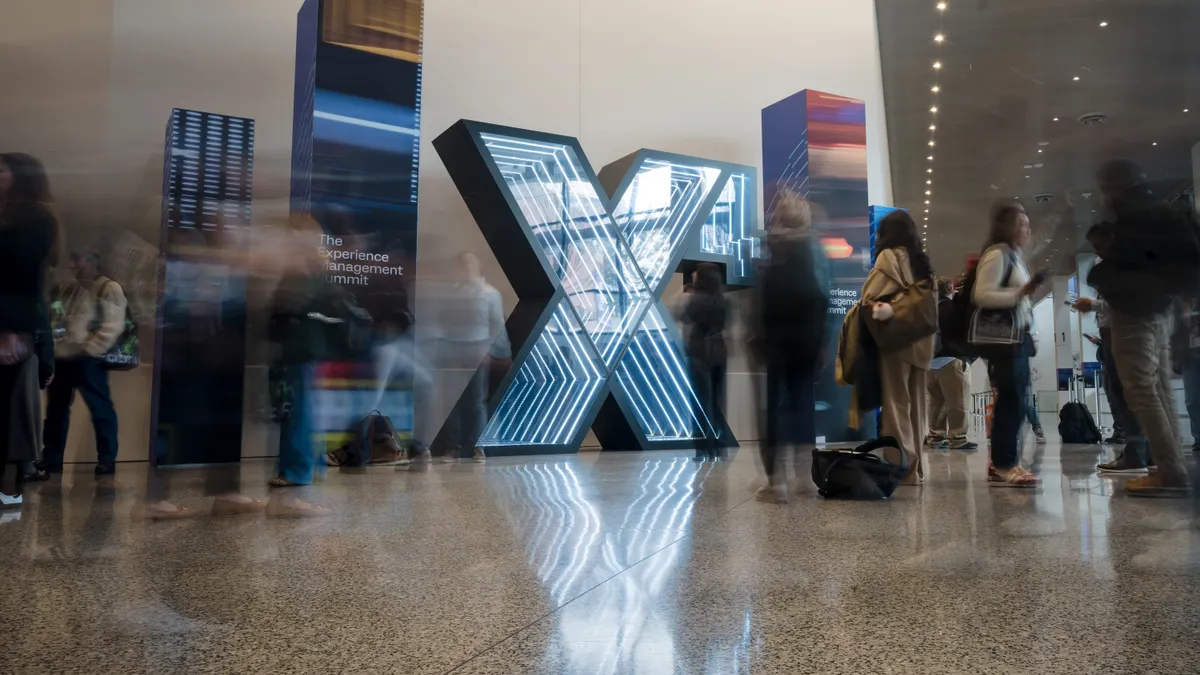
As thousands of CX practitioners descended on Seattle last week, conversations ranged from how one large retailer implemented geofencing to tying employee listening in with better customer experiences.
But from the stage at Qualtrics’ X4 2026 to attendee round tables, there were a few topics that came up time and again, beginning with taking action.
CX practitioners are working to move beyond simple voice of the customer programs and are beginning to connect customer data to tangible outcomes. But to take action they need executive sponsorships and buy-in across the enterprise. They’re starting to speak the language of the C-suite to court champions.
Conversations also moved beyond AI hype to a place of specificity, discussing how and when to use the technology to improve customer outcomes, and where AI can’t solve customer challenges.
Connecting data analytics to outcomes
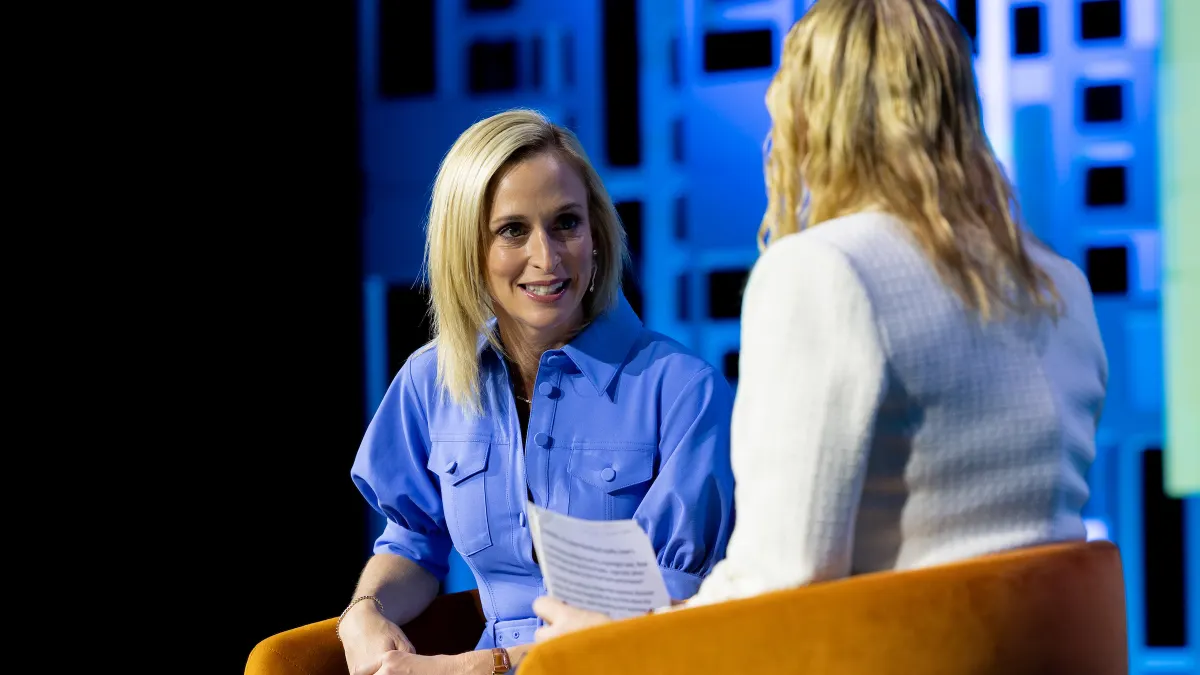
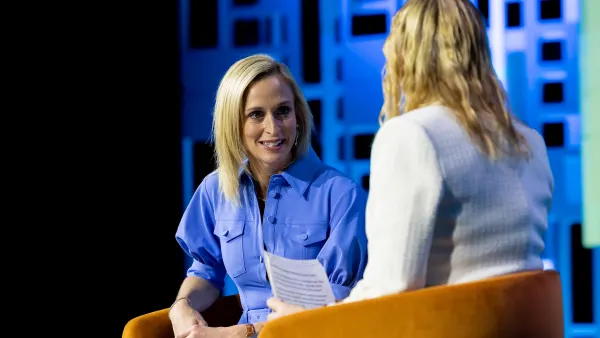
Forrester Principal Analyst Judy Weader talks with CX leaders on a regular basis about outcomes — about connecting the improvements they want to make to specific business benefits. At X4, the topic graced the mainstage during the first keynote Wednesday.
“It's really vindicating to finally see the vendors talking about this as well,” Weader said. “We need to be having more conversations about how we go from a piece of data to taking that piece of data and wedding it with some business context, which helps you generate an insight to then taking some kind of action that will result in some kind of a benefit.”
Having vendors discuss this signals that the capabilities they’re developing will help CX leaders reach those specific outcomes.
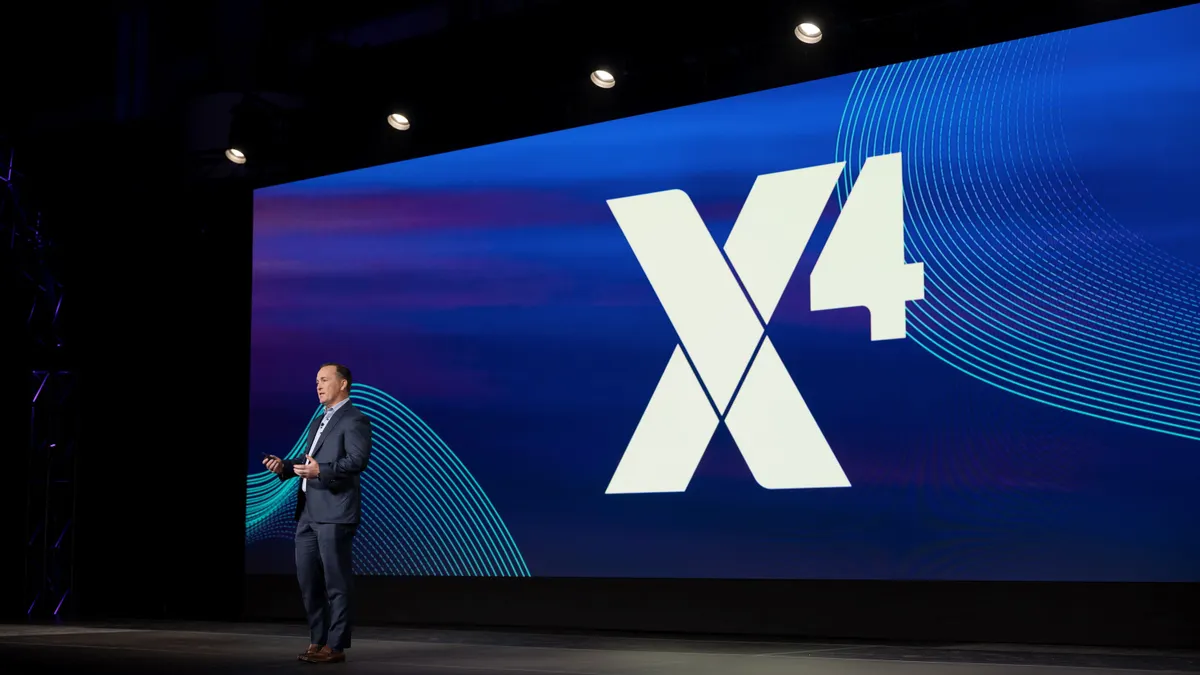
“You can listen across every channel, every touchpoint, wherever customers and employees are telling you something, you know what they're saying, you understand the why, and that understanding is real, and you've done the hard work, and you're bringing it together and you're taking that value back to your companies,” Qualtrics CEO Jason Maynard said during the keynote Wednesday. “But you see, turning that data into understanding closes what I'll call the first gap, that was the insight gap.”
But there’s another gap Qualtrics is helping leaders overcome now, he said.
“What organizations still can't do consistently, systematically in time to actually matter is take that understanding and turn it into the outcome your customers need in the moments that matter the most,” Maynard said. “The new experience gap is between understanding and outcomes. You see, I believe this is the gap that we have to obsess over. This is the gap we have to solve.”
Finding an executive champion
Executive buy-in is important for every single industry, some more than others. For Marriott International, experience is built into the equation. That dedication to customer-centricity is one of the reasons the company has been able to take on such a comprehensive experience strategy, according to Emily Nohe, VP of business analytics.
“From the top we have always been a company that cares about customer experience,” Nohe said during a Thursday presentation about unifying guest signals across channels. “You have to have those senior leaders that support you.”
President and CEO of Marriott Bonvoy Anthony Capuano joined the conference via video on the X4 mainstage Thursday, followed by Chief Customer Officer Peggy Roe.
But for most companies, the case needs to be made, and an executive champion needs to be courted.
“It costs money to improve the customer experience, but there are business benefits at the back end of that,” Weader said. “If you do it right, you can make more money, you can save more money, you can futureproof your firm, but you can't get there if you can't convince the CFO to give you the money.”
To convince the CFO to fund a project, CX leaders have to talk like a businessman, according to Weader. That means connecting CX initiatives to business outcomes.
If, say, fixing a login issue on the website could wean out 5% of calls, the next step is to translate that into how much money the business could save.
AI isn’t everything
AI hype is everywhere, but at X4, leaders engaged in tempered discussions about AI.
During a panel on using data analytics for outcomes, Michael Valanzola, voice of customer and NPS operations at Dell Technologies, acknowledged that AI will introduce friction by the act of changing the flow.
“The reality of it is, when you attempt to leverage any AI capability, you are immediately going to create friction, because you're ultimately changing the way you're interacting with and you're operating with your customer,” Valanzola said Wednesday.
Businesses should still pursue it, but they need to have a game plan in place.
“In order to tap into and leverage AI appropriately, you have to be persistent and consistent,” Valanzola said. You have to have a low level of effort expected of the customer. And it needs to be personalized in a way that the customer feels like that engagement is on parity with their previous experiences in dealing with people.”
AI can also be used to give back time to frontline workers so they can better serve customers. For healthcare, AI is a tool to give doctors and medical professionals back time to connect with patients, said Jason Guardino, CXO at the Permanente Medical Group.
“Imagine a world where you come in and the doctor never touches the computer during the entire visit,” Guardino said. “And what's happening behind the scenes is ambient listening.”
AI can take in the entire conversation and write notes — one of the biggest burdens for medical practitioners.
“You see 15 or 20 patients a day, and you have to write 15 or 20 notes,” Guardino said. “That's an extra two hours of time minimum at the end of the day. And now the ambient scribe basically takes all that information and populates our note from us for us, where we can just go quickly proofread it and add things like diagnosis and treatments to it. So it's bringing the actual humanity back into the visit.”
The key is using AI to augment the human experience, Weader said.
“I would say a lot of noise over the last at least year about how AI is going to save us from everything,” Weader said. “But the AI isn't necessarily doing the actual work of holding the hand of a patient, for example.”
As tech-enabled the practice has become, leaders can’t forget about the human element of experience.
“I'm very concerned about people who are only talking in terms of digital when they think about customer experience because we are not digital beings,” Weader said. “We may have digital representatives. We may have agents, we may have, digital doubles, but we're still physical beings. I may have checked in through a website for my hotel, but it's me sleeping in that bed. It's me using the desk. It's me opening the curtains. So the experience of being in that hotel, only a very tiny portion of it was the portion where I checked in through the website. The majority of my interaction with the hotel is with the physical room.”