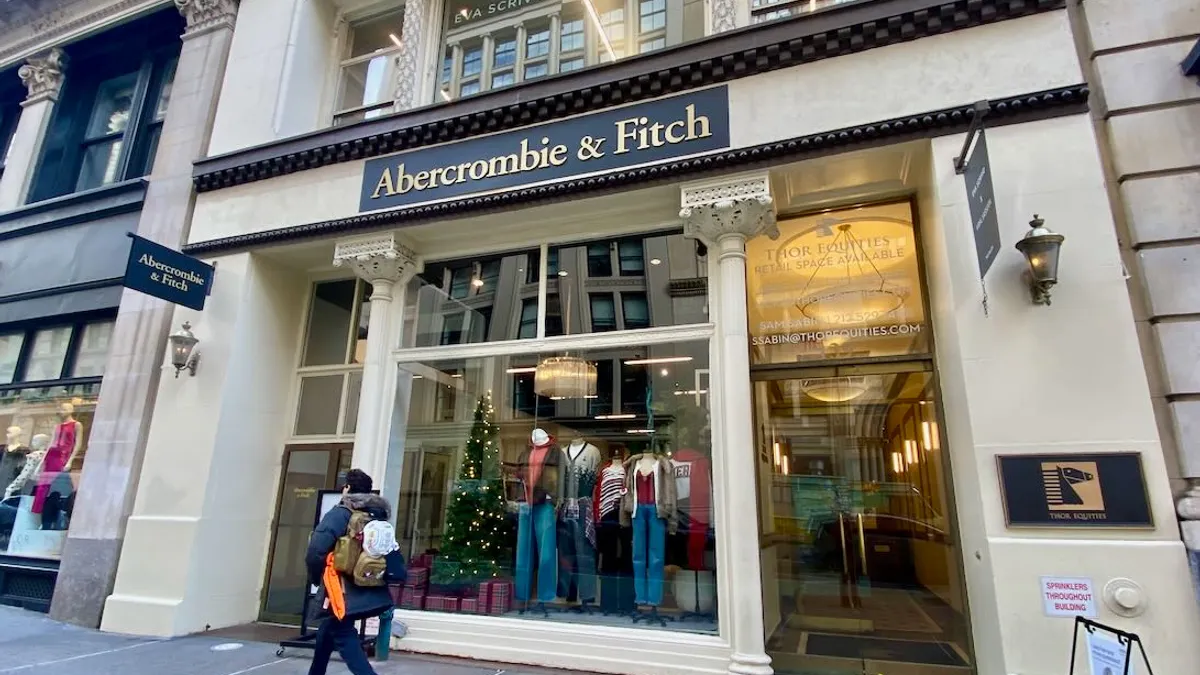
While most Abercrombie & Fitch customers purchase online, the store remains a critical channel for customers to browse and shop.
That’s especially the case for its sister brand Hollister, which serves a younger customer who prefers shopping in person.
Abercrombie & Fitch Co., the parent company of both brands, has long gathered customer insight from these trips, including surveys from customers who bought something in a store, online reviews, and more, according to Joelle Cann, head of voice of customer and user experience research at Abercrombie & Fitch.
But executives often asked the CX and voice of customer team: What about those customers who don’t buy in store? What was missing from their experience that led them to walk away without a bag in hand?
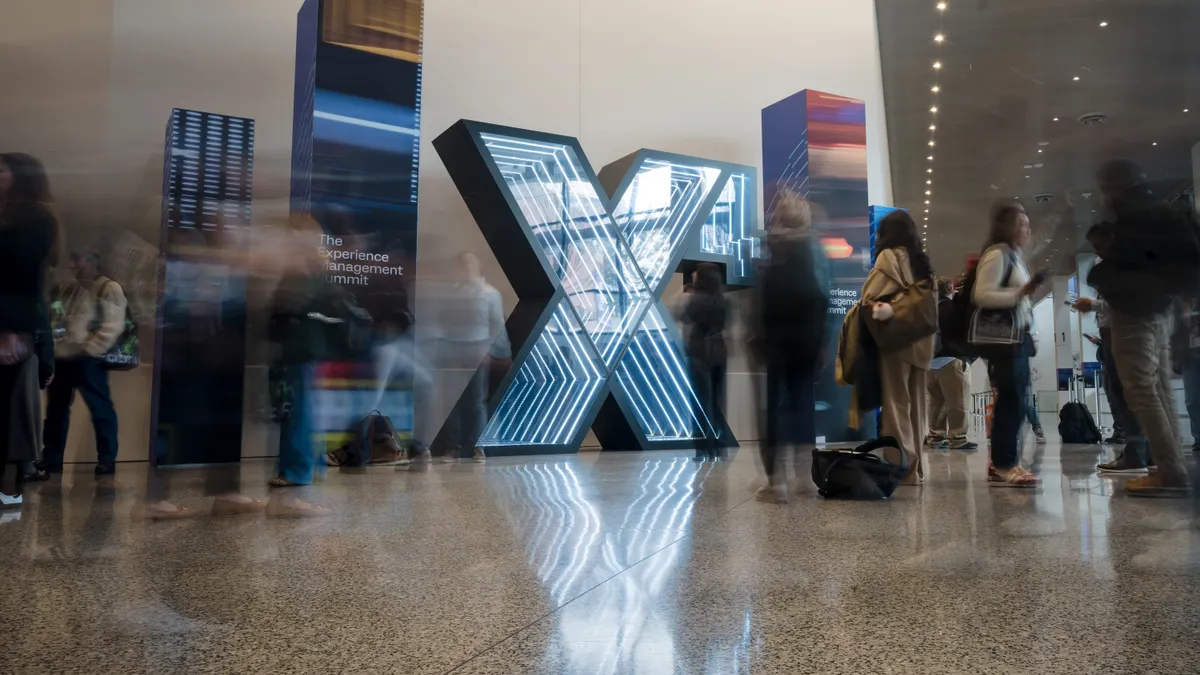
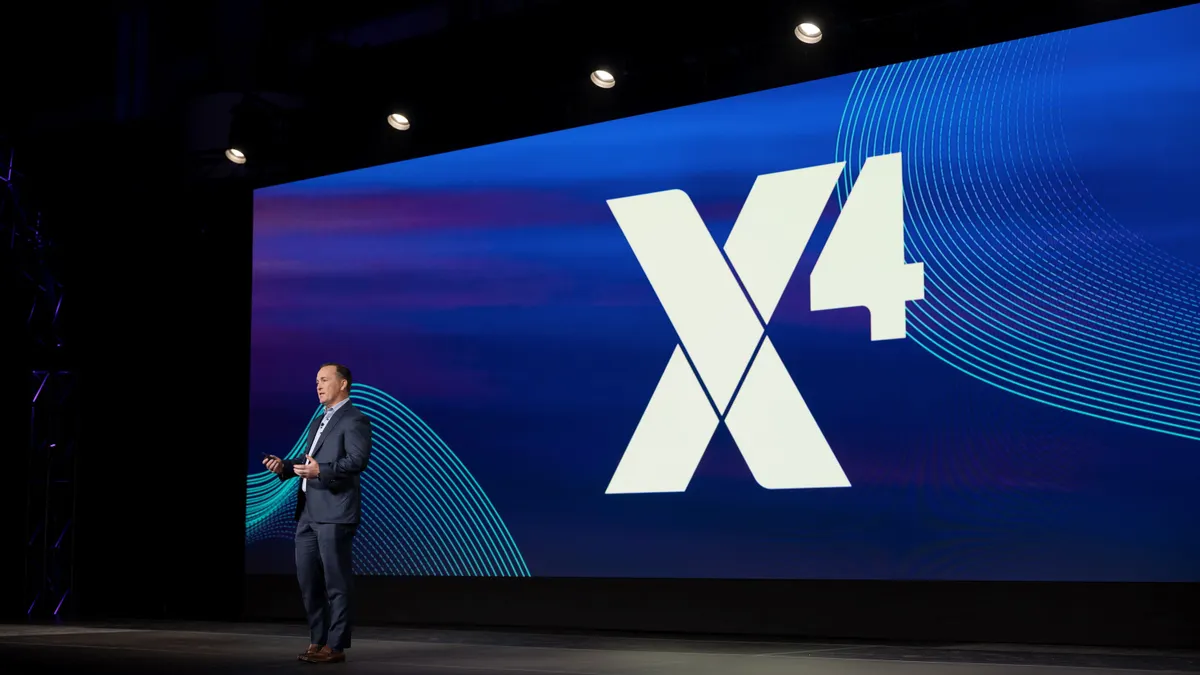
“We're often relying on the feedback that's easiest to collect, while a large part of the journey is harder to see,” said Madison Blair, senior research analyst on Abercrombie & Fitch’s voice of customer team, speaking at the Qualtrics X4 conference in Seattle last month.
It leaves the team with questions about what went wrong.
“Is there something going on in the store that isn't working, is it an assortment issue, an apparel issue? Is it a pricing perception issue? Is it an experience issue? Is the store layout right?” Cann said during a session at X4. “So that's kind of the gap that we're trying to bridge. And there's a reason it's so hard to bridge. These customers are incredibly hard to find and communicate with. There's no transaction. There's no point of communication with them. And so they are anonymous.”
Abercrombie & Fitch’s team deployed geofencing — often used as a type of location-based marketing and advertising — to track in-store visits and request feedback from those customers who did not purchase an item.
“Geolocation isn’t new. Many companies use this to detect what a customer is near entering one of their stores, but what's different about our approach is how we use that signal to capture feedback,” Blair said. “So with customer consent, we're able to track when a customer has been actually in one of our stores and follow up with them later to get feedback about their visit.”
How Abercrombie & Fitch uses geofencing
Abercrombie & Fitch has an advantage with geofencing: It has strong relationships with customers through its mobile apps, which were built to be a digital and store shopping companion.
“Customers can browse, save items, interact with products, but they can also take them in store and use it in store mode and interact with products live,” Blair said. “Because many of our most engaged customers interact with a customer app, that creates an opportunity to reconnect with them after their visit and invite them to share feedback about their experience.”
It also solves a problem VoC teams often face — a lack of reliable context.
“We're able to tie the visit to an actual store visit, and that gives us clear context and credibility in today's experience,” Blair said.
During app setup, customers have the opportunity to set location access to be available always, allowing the CX and VoC team to be able to track when they enter an Abercrombie & Fitch store.
“And that's really what unlocks the ability for us to be able to follow up with them after to collect,” Blair said.
When the app recognizes that a customer has entered a shop, it can send a push notification inviting them to use in-store mode. Customers have to enable notifications in the app, a setting that can be enabled at several points throughout their journey.
“From here, the visit is reported through the app’s geolocation capability, whether or not the customer chooses to use that in-store mode,” Blair said. “So the app then captures key context about the visit, like visit date, internal location, and that information allows us to tie any feedback that we receive to a real store visit, giving us clearer context and credibility.”
“When the customer leaves the store, the app recognizes that they've left that geofence area around that store location, and then our geofencing partner notifies our marketing platform of that exit,” Blair said. “From there, that is a trigger that allows our marketing platform to send a push notification to that customer following up about their visit.”
About an hour after the customer leaves the store, Abercrombie & Fitch sends them that notification asking them to provide their feedback about their store visit.
That timing provides customers time to leave the mall or go about their day but is still close enough to their visit that their experience and perception are still fresh, Blair said. To encourage participation, the retailer provides loyalty points as a thank you to those who complete it.
“We know that these customers are really our first engaged customers, and so the loyalty point incentive is something that really resonates with them,” Blair said. “And because of that, we don't really have to worry about response volume. We get a lot of responses.”
The company can then turn that insight into real-time action.
“Because this is tied to a real store visit, it's delivered directly to the teams responsible for that so store managers receive feedback from both buyers and non buyers in near real time and quickly identify themes,” Blair said.
This allows teams to quickly take action, whether that's adjusting fitting room flow or wait times.
“We're able to capture key data like visit, date, tour, location, entry and exit timing and customer identifiers, and that additional context helps us understand the experience and identify patterns across store locations, time periods and different customer segments,” Blair said.
Focusing on the most engaged customers
Abercrombie & Fitch’s geofencing strategy requests feedback from its most engaged customers — after all, not every customer will have downloaded the app or responded to a feedback request.
“That's just one piece of the pie for us. This is our clearest way to get a sense of what is differentiating the experience between buyers and non buyers,” Cann told CX Dive following the session. “The better we can know them, the better we can create experiences that wow them.”
It also is the best quality data — the team knows that those customers have a visit tied to them.
“It is important for us to talk to the engaged customers because we can verify them,” Cann said. “We can verify their experience, and we can send that to our store managers and our leadership with trust.”
But are all customers OK with geolocation?
“Based on our response rates, I think they feel pretty good,” Cann said. “We don't hear from them like, ‘Hey, what are you doing?’ You don't get any negative feedback on the survey, and our store managers haven't ever mentioned that.”
Geofencing might not work for every brand. Such levels of personalization only work when the brand has already established a high level of trust with customers, experts say. If brands haven’t engendered trust or don’t show the value, they risk customers viewing such personalization efforts as creepy.
“It really is about context with all this personalization. In general, if you ask someone, they might say geofencing sounds creepy,” Jeannie Walters, founder and chief investigator of Experience Investigators, told CX Dive. “When it’s relevant and contextual to them, it can feel helpful.”