Dive Brief:
- Customer satisfaction with banks increased marginally overall last year, but sharp declines during the second half of 2025 are cause for concern, according to a JD Power report based on a survey of more than 107,000 retail bank customers.
- Declines during the second half of the year were most pronounced among common customer touchpoints: Clients expressed less satisfaction with phone, branch, online and automated customer engagement channels.
- The decline in satisfaction in the second half of the year is a "first warning sign" that "the wind is not at banks’ back,” Jennifer White, senior director of financial services intelligence at JD Power, told CX Dive.
Dive Insight:
The satisfaction declines in the second half of the year coincided with diminishing consumer sentiment and growing financial hardship.
“We do know that consumers are struggling financially, and when consumers struggle financially, they tend to have lower satisfaction rates with their experiences,” White said. “They're at greater risk of paying fees, and they may be more in tune to missed perks.”
Financially struggling customers have greater needs. They are more likely to be contacting their bank to resolve problems like unexpected fees for not meeting the minimum deposit.
Customers are also using multiple banks to meet their banking needs. The average checking account customer maintains three deposit accounts at different institutions, and 1 in 5 have taken money out of their primary bank within the past three months.
The top three reasons say they use multiple banks are to save for an emergency or a rainy day, gain better interest rates or deposits, and manage day-to-day finances. More consumers reported the need to save for a rainy day.
“Two answers tell us that consumers need assistance in managing their day-to-day finances in a way that isn't accessible to them at their current bank,” White said.
Assistance could be as easy as a digital functionality that allows for savings buckets so that they can better separate savings away from everyday spending, White said.
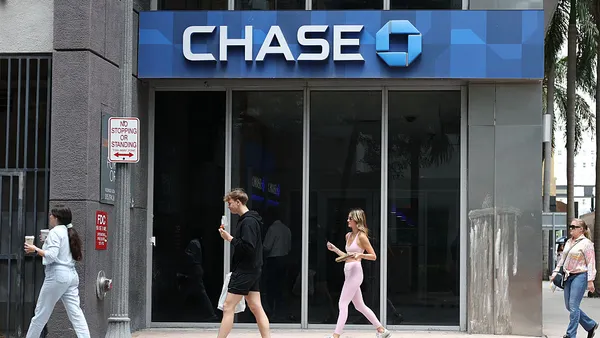
The report also named the top performers in 15 regions of the U.S. Among the names were some large national banks like Chase and Capital One, large regional banks like Huntington, and mid-sized banks like Frost, Wintrust Community Banks and Bangor Savings Bank.
“What these banks, regardless of their size, have in common are a few key things,” White said. “Very often, they are scoring strongly on resolving problem friction well. So when there is an issue that a customer needs, they're making the most out of that experience. Because sometimes when you have a problem, you know, a good resolution can actually result in higher customer experience satisfaction scores than never having the problem to begin with.”