Many of today’s loyalty programs heavily favor younger consumers, leaning on features like gamification and experiential rewards to drive appeal.
But the U.S. population is aging rapidly, with older adults representing a growing share of spending. People age 65 and older will comprise nearly one-quarter of the total U.S. population by 2060, according to the U.S. Census Bureau.
Brands should ensure their loyalty programs appeal to older consumers, as they’re often their most valuable customers, experts say.
EY’s forthcoming 2026 Loyalty Market Study, which has tracked demographic cohorts for several years, found that just 7% of consumers aged 55 and older belong to more than 10 loyalty programs, compared with 15% for the general population, according to an EY spokesperson.
This older cohort of “selective savers” choose a small number of trusted brands, with more than half joining programs only after already knowing and trusting the brand, according to EY Americas Loyalty Leader Patricia Camden.
“For this cohort, loyalty programs are about ‘How do I strengthen an existing relationship?’” Camden said.
Focus on value
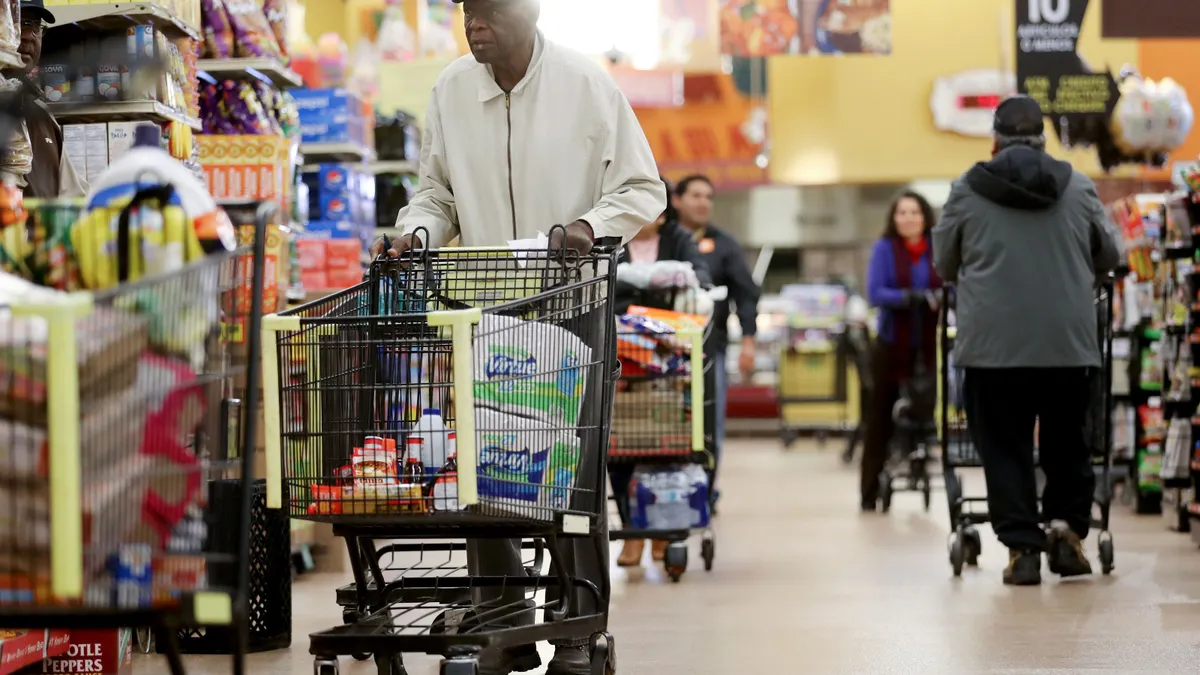
That trust-first orientation shapes what older consumers want from rewards. They prefer points that translate directly into savings or cash value and get frustrated when points expire, viewing it as a breach of trust.
They’re also the most skeptical of AI and personalization.
Other age groups, however, are also increasingly focused on value amid high prices and economic headwinds. EY’s latest survey data shows that across all age groups, consumers are joining fewer programs, engaging less and gravitating toward straightforward value over experiential rewards and other bells and whistles, Camden said.
While many assume younger consumers have higher customer lifetime value and lower acquisition costs, that’s not necessarily the case, experts say.
Older consumers tend to have more stable purchasing power and are the most loyal once trust is established, both of which reduce churn and contribute to greater lifetime value, even if the theoretical lifespan is shorter. Their spending influence also extends beyond their own purchases, across households and generations.
The aging population, however, is not monolithic, said Maureen Burns, partner at consultancy Bain & Company. There are at least two segments: wealthy, healthy consumers with ample disposable income and free time, and those facing health or financial challenges.
“Some of these older customers have such levels of disposable income that the lifetime value could be significantly higher than large segments of younger customers,” Burns said.
She added that acquisition costs may not be as steep as brands expect because older consumers tend to respond to channels like email and direct mail with higher click-through and open rates.
Age is more than a number
But reaching older consumers requires looking beyond age as a segmentation tool. CX leaders are shifting from broad demographic categories like age and geography toward psychographics, which include values, motivations and shopping preferences, said Halle Stern, director analyst at Gartner.
“As a marketer, being the same age doesn’t tell me much about how I should shift my loyalty program,” Stern said.
Channel strategy matters, too. Rather than blanket investment across all channels, brands should prioritize channels their core customers actually use. They should also be careful not to push every customer to use an app.
“For many brands, you don’t earn the right to have that kind of engagement,” Burns said.
According to experts, there are four key pitfalls that brands should avoid as they adapt their loyalty programs for aging consumers:
- Undervaluing older customers, while overvaluing younger consumers.
- Designing programs around internal assumptions rather than actual customer data.
- Over-engineering programs with complex point structures and redemption processes that require significant effort from customers.
- Over-indexing on novelty like gamification and sweepstakes that may work for some audiences, but don’t deliver the practical value older consumers want.
Brands also need to rethink what aging means going forward, as today’s older adults are more digitally savvy, healthier and active consumers well into retirement, making it prudent for brands to factor demographic shifts into how they target customers and structure loyalty programs.
“This aging of the U.S. population, it’s not just a moment in time,” Camden said. “This is a massive structural shift in our population. It’s going to influence how customers think about brands and how they build relationships for decades.”