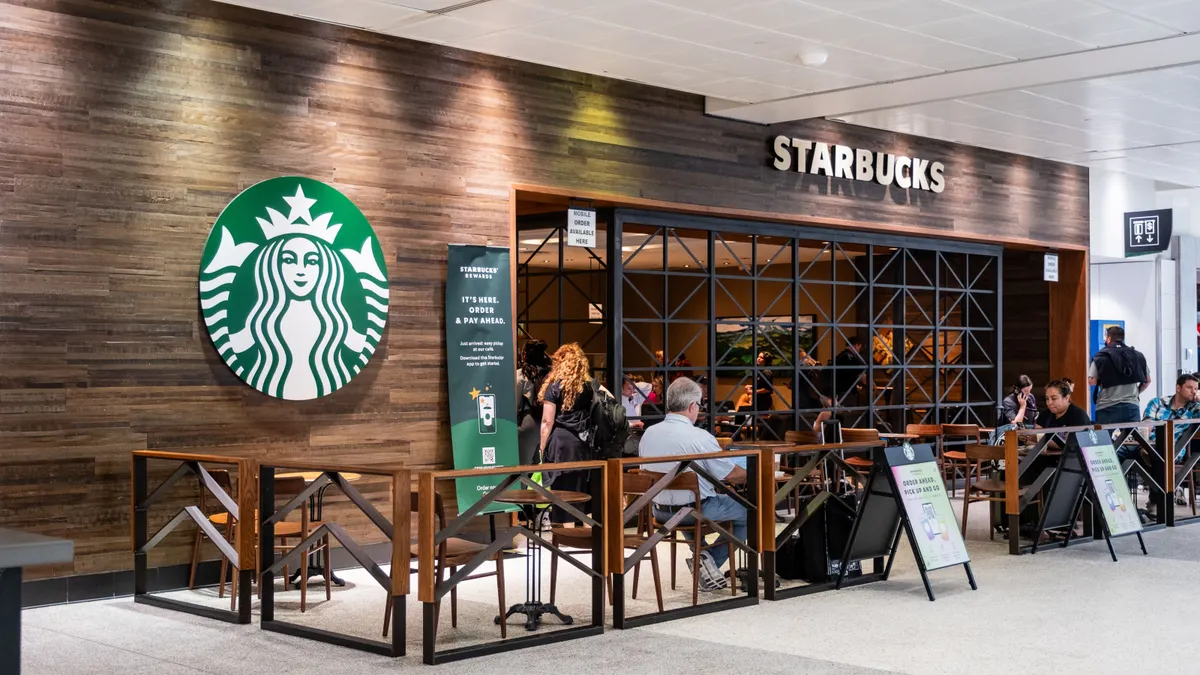

Starbucks wants to speed up service at high-traffic licensed locations using new ordering processes, the company said in a blog post by Aaron Koransky, senior vice president, U.S. Licensed Coffeehouse Business.
The company confirmed that Starbucks was focused on improving ticket times specifically at high-traffic locations. It is exploring ordering kiosks and scheduled orders through the Starbucks app in airport locations and other high-volume locales. The chain is also making other changes, like deploying its new brewed coffee machinery, across licensed stores.
According to Koransky’s blog post, the changes are meant to ensure that there is not an appreciable division in consumer experience between company Starbucks locations and licensed ones.
The coffee giant has restructured its licensing business from a regionally focused model to one divided up by segment. Starbucks said the segments include healthcare, travel and campuses, but didn’t clarify how many segments its licensed business possesses. Koransky said the restructuring was prompted by the specific challenges faced by different kinds of venues.
“A Starbucks in a hospital, a grocery store or an airport face very different realities,” Koransky wrote. ”This structure gives us clearer focus, more relevant support and a stronger foundation to grow in high-potential segments like travel, healthcare and campuses.”
Starbucks is launching initiatives meant to improve its licensing business overall, including “a licensee-specific version of our GROW program, clear Starbucks points of contact and consulting support focused,” Koransky said.
The Grow program is a simplified reporting system to measure key performance indicators at coffeehouses, according to the chain’s most recent earnings call. The brand is also adding performance-based incentives and “rightsizing product and equipment for different settings,” Koransky said.
Starbucks’ licensed store system includes more than 7,200 stores in North America, and more than 12,000 stores internationally, according to the coffee giant’s most recent 10-Q. Any major overhaul of the system will likely take considerable time. But Koransky framed the changes as a precursor to a “next phase of growth.”
Licensed businesses made up 12% of Starbucks’ total net revenue in fiscal 2025, according to the company’s annual report. Starbucks said these stores typically have a lower gross margin and higher operating margin that traditional company-owned locations. During fiscal 2025, licensed store revenue fell by $155 million to about $4.4 billion. The bulk of that decrease came from lower product, equipment sales and revenues from the North American segment, which contributed $143 million to that decline.