


Dive Brief
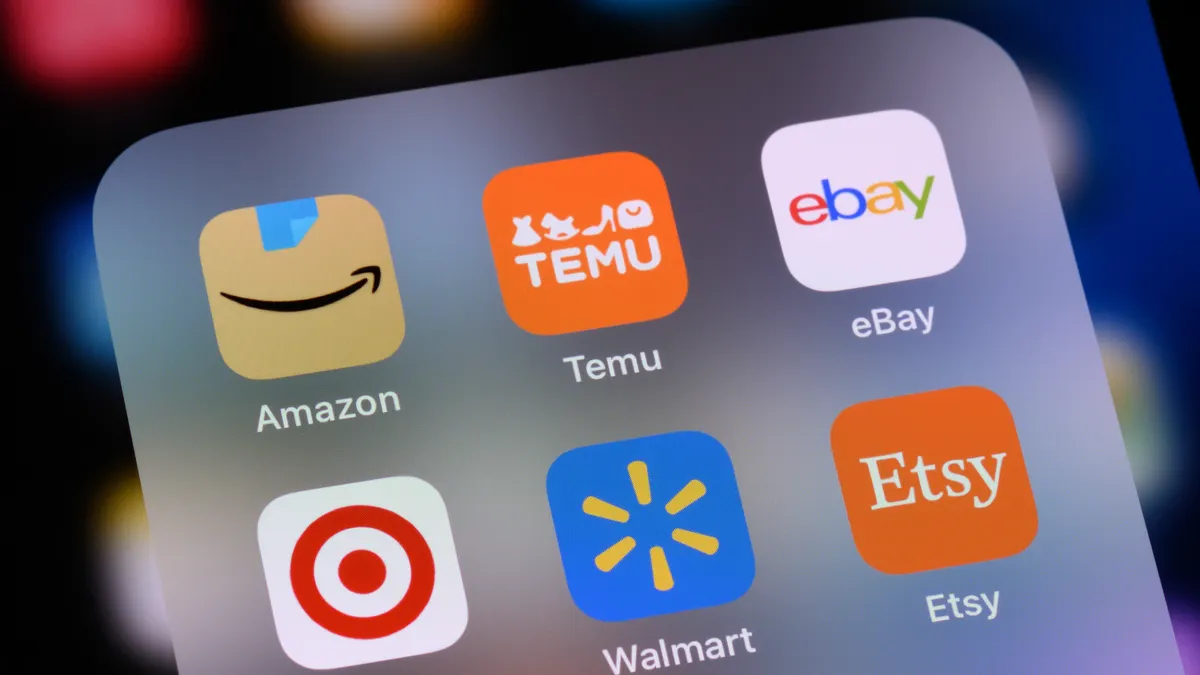
- Nearly three-quarters of consumers delete the retail apps they downloaded to obtain a one-time discount or purchase, according to an Adobe for Business survey of 1,000 U.S. consumers released last month.
- Consumers’ top reasons for downloading retail apps are to join loyalty or rewards programs, access one-time discounts or promotions and enjoy an easier shopping experience.
- Consumers delete apps they don't use or find useful beyond the initial transaction. But, they typically keep apps that save time, make shopping easier and deliver value past an initial transaction, Adobe found. Increasingly, AI-powered capabilities are providing that stickiness.
Dive Insight
Brands that embed AI capabilities within their apps are more likely to cultivate a lasting relationship with those customers who only downloaded the app to make a purchase.
When it comes to AI features, 65% of respondents said order tracking and status updates would increase their willingness to keep an app. Another 57% cited points and rewards tracking features, Adobe’s survey found.
AI writ large isn’t necessarily the answer, according to Brad Cleveland, CX expert and author. Rather, it’s a tool.
“Consumers aren’t waking up in the morning wanting to use AI, per se, in a retail app,” Cleveland told CX Dive. “They want to find the right product. They want to get a reliable answer, solve problems and, really, cut as much effort out of the process as possible.”
Being easy to do business is a tenet of good customer experience, Cleveland said. “That’s as true now as ever. AI succeeds when it makes those things easier.”
Aside from AI, frequent use was the main reason customers moved an app to their home screen, with 61% of respondents selecting that, followed by ease of use and access to exclusive content or early promotions, selected by about one-quarter of respondents, Adobe found.
AI can help brands clear that frequent use hurdle by surfacing and personalizing recommendations, and offering visibility into why some products were highlighted. Marie Driscoll, president of the Retail Marketing Society, called this being a good “editor” — that is, AI tools can make shopping easier by providing a curated assortment of merchandise.
Trust is fundamental to this process because AI relies on opted-in personal data, combined with back-end processing, to provide those unique recommendations. Brands must be transparent in what data they collect, how it’s being used while providing a clear path to opt in or out as the customer chooses.
“There's a line between creepiness and helpfulness with the information they have on us,” Cleveland said. “So, being very transparent in ensuring you're building that trust, [will] help fuel the use of these apps.”
Consumers also favor useful retail app experiences across the entire customer journey, including customer service. Two in five customers said they would be more likely to add a retail app to their home screen if it offered built-in AI-powered post-purchase support; one in five said those features would make them less likely to delete the app altogether.
While those are relatively small numbers, failing to provide a path to assistance during a transaction may cost retailers the immediate sale as well as any future chance at another.