Consumers won't tally up what they're owed as businesses begin recouping billions in tariffs — but they will judge whether companies handle the windfall fairly, experts say.
The Supreme Court ruled in February that the tariffs the Trump administration imposed under the International Emergency Economic Powers Act were illegal, leading the U.S. Court of International Trade to order more than $166 billion in refunds to businesses. The money is trickling out slowly — only $20.6 billion has been reimbursed since the end of May.
Overall, American consumers paid more than $231 billion in tariff costs between February 2025 and January 2026, averaging roughly $1,745 per family, according to the Joint Economic Committee.
But most customers couldn't calculate a tariff refund if they tried, experts say. Few can tell how much of any price increase came from tariffs, how much a company absorbed or which products were even affected.
“Most consumers realize they have generally absorbed tariffs through higher prices, but they lack clarity on when and where,” said Dipanjan Chatterjee, VP and principal analyst at Forrester.
The exceptions are the cases that customers can see. Nintendo, for example, drew a class-action lawsuit after it delayed the launch of the Switch 2 and subsequently raised prices on its accessories, a jump it attributed to “market conditions” amid tariff hikes. Meanwhile, FedEx, which lists tariff charges on its invoices, has said it will refund customers based on those charges.
Such clear-cut cases are rare, though. For most brands, it's unlikely that customers will penalize them for failing to issue refunds. But they will punish brands that remain silent.
“Customers are going to resent companies that simply don't say anything at all,” said Matt Lyles, an independent CX consultant and speaker.
Communication is king
The safest course, experts say, is to say something proactively rather than stay silent or be too specific.
“In the absence of a story, people tend to make up their own story, and that story usually isn't good,” Lyles said.
Specificity, meanwhile, carries legal risk. Naming an exact tariff amount can read as an admission that customers were overcharged, which “can give rise to litigation if it's not 100% accurate,” said Dan Cahoy, head of the risk management department at Penn State University's Smeal College of Business.
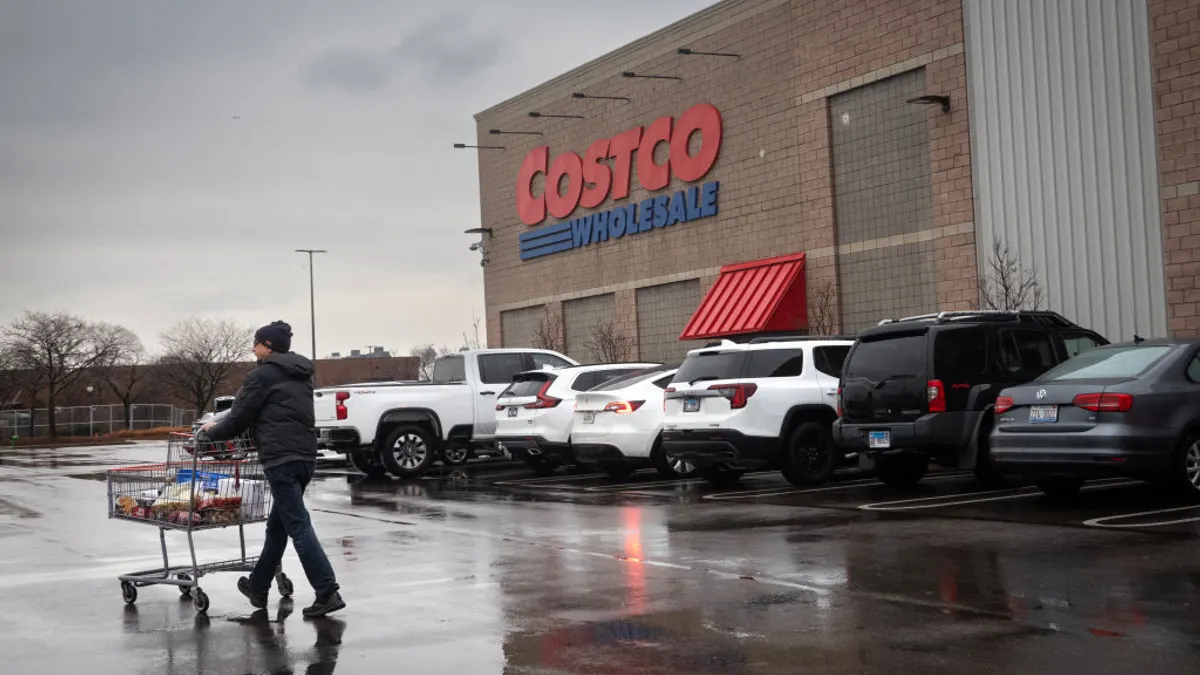
But offering a vague, positive benefit can actually help. Walmart, for example, has promised to use its tariff refunds to lower prices, as its customers struggle with affordability. In March, Costco announced it would also lower prices, just days before a class-action lawsuit was filed against the company.
Such moves could serve as “a little bit of a shield against some of the class action suits,” Cahoy said.
Costco has since asked a federal judge to dismiss the case.
Regardless of the approach, experts say a company’s legal and public relations teams must approve all messaging to “tighten the reins” and avoid potential disaster, Lyles said.
What should companies offer?
When a company does pass something back, the form matters as much as the message. Cutting refund checks is rarely worth it, Chatterjee said. “Reimbursement has all the makings of an extremely expensive and laborious processing nightmare.”
Visible gestures, including “temporary price reductions, loyalty credits, free memberships, bundled upgrades or targeted rewards for existing customers,” can build goodwill and increase sales volume, Chatterjee said.
“The point is to pay back the customer without reimbursing them,” Chatterjee said.
Whatever the form, the simplest path for the customer is best. Forcing people to “fill out forms, upload receipts and submit claims” undercuts the goodwill the gesture is meant to create, Lyles said.
But now is the time for brands to figure out how to address tariff refunds, as the Trump administration is still contesting how much it must repay and is weighing new duties.
“Tariffs aren't going away,” Cahoy said.