Dive Brief:
- Delta Air Lines’ loyalty ecosystem and premium services continue to push the airline’s earnings higher, with revenue for each growing nearly 20% year over year, executives said on a Q3 2026 earnings call Friday.
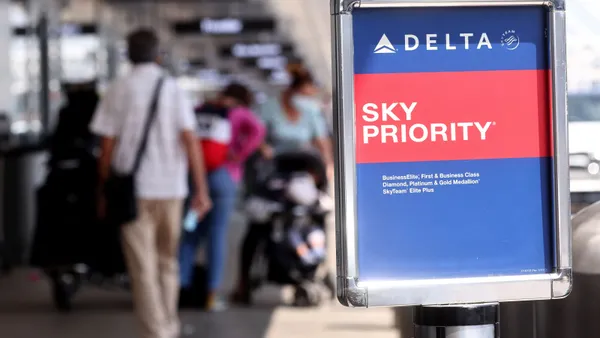
- SkyMiles membership is growing faster than capacity, according to CEO Ed Bastian. Meanwhile, co-brand card acquisitions and spend both grew double-digits, marking the eighth consecutive quarter of double-digit growth in cardholder spend, according to an earnings report.
- Bastian attributes loyalty revenue growth to a variety of factors, including increased fares and increased customer engagement via SkyMiles and the airline’s American Express cobrand credit card partnership. “You're really seeing a very strong ecosystem of spend in all categories, and especially in premium products from our loyalty program,” he said on the call.
Dive Insight:
Delta’s loyalty and premium push continue to pay off for the airline and show no sign of slowing down.
The airline reported revenue growth of 16% year over year to $2.4 billion in the third quarter, while the airline absorbed $1.6 billion in higher fuel costs, according to executives.
Part of that growth is due to the airline’s diversified revenue stream. Just 39% of revenue came from the main cabin, while 61% of revenue came from diversified revenue streams, including premium and loyalty.
“Our growing loyalty ecosystem is one of the most important drivers of our structural variability,” Bastian said.
Delta expects remuneration from its Amex partnership to deliver more than $9 billion this year. Bastian touted the cobrand cards, which took the top three spots in JD Power’s customer satisfaction survey of airline cobrand credit cards.
Demand remains high for Delta’s fares and products despite increased prices, executives said.
“The top 40% of U.S. households, which make up the majority of Delta's customer base, are nearly $40 trillion wealthier than they were just a few years ago and increasingly prioritizing experiences, including travel,” Bastian said.
Air fares have increased, but fares are still below the cumulative inflation rate of the last few years, making air travel still a good value, and “the market has accepted these price points,” according to Bastian.
“That demand is evident across leisure and business travel, and across all cabins,” Bastian said. “I think where we're at is very sustainable.”