Dive Brief:
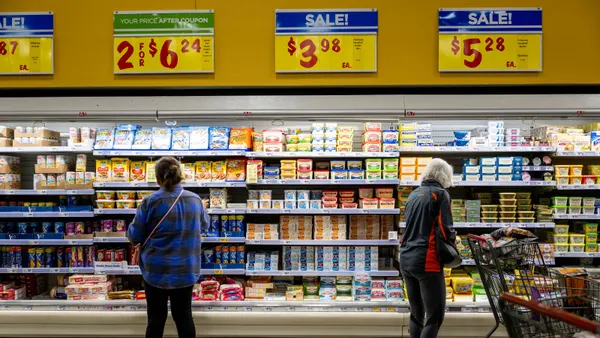
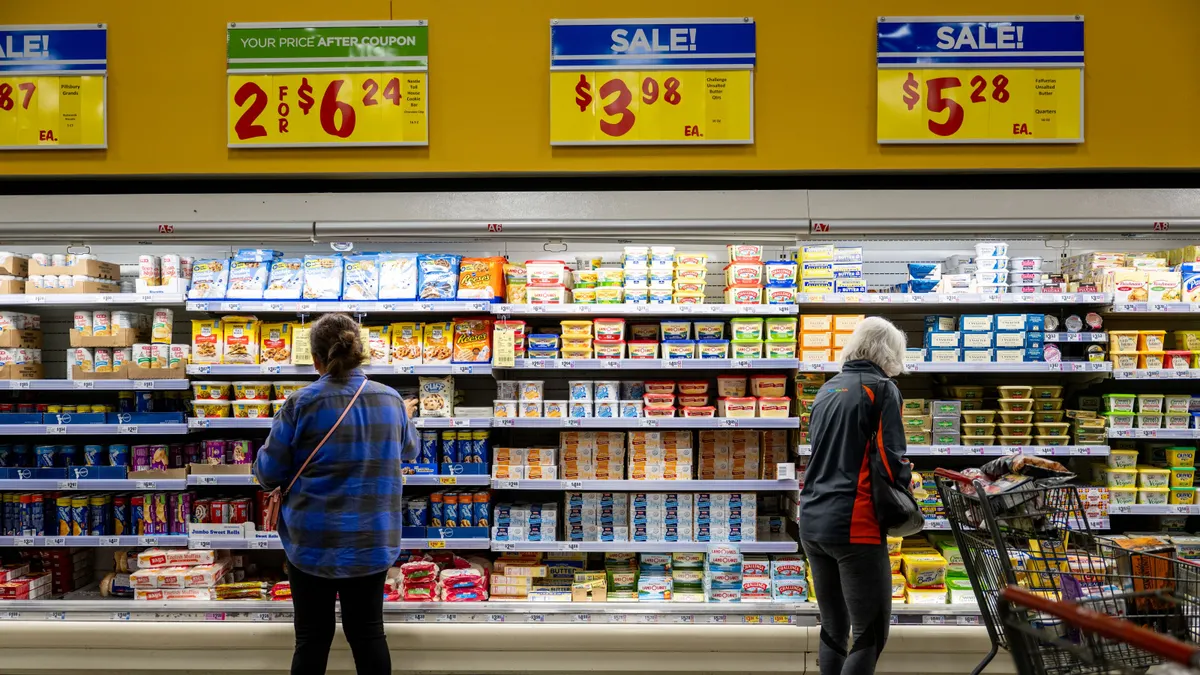
- Consumers in the United States are financially squeezed and are increasingly seeking value for their money among the businesses they frequent. One-quarter of consumers feel they are worse off than one month ago, according to an EY-Parthenon Consumer Sentiment Survey of more than 2,000 U.S. consumers.
- Consumers are prioritizing essentials and pulling back on spending on discretionary goods in such categories as restaurants, entertainment, travel and apparel.
- “Rising financial anxiety shows pressure is building beneath the surface,” Mark Chambers, EY Americas retail sector leader, said in the report. “Retailers that emphasize value, convenience and affordability will be best positioned to maintain consumer loyalty in the months ahead.”
Dive Insight:
EY-Parthenon’s survey builds on a swell of research showing consumers, uneasy about economic conditions, are changing their shopping habits.
Inflation and tariff-induced price increases plagued consumers for the past year. Even as some indications of inflation have appeared to cool, consumers have begun worrying about a potential recession. That’s not to mention the recent war in Iran, which has thrown more uncertainty into the mix: EY-Parthenon’s survey was conducted in December, prior to the war, and does not take into account recent concerns about rising oil prices.
“Consumers continue to feel squeezed by high costs of living, exacerbated by general anxiety over the macroeconomic and geopolitical climates,” Betti Packman, principal of consumer products and retail at EY-Parthenon, said in an email.
EY-Parthenon’s research found that consumers are most concerned about paying for essentials — groceries, savings and investments, and housing.
This economic anxiety is causing some to show less loyalty, with 15% switching personal care brands, for example.
“They are focused on keeping expenses flat and reallocating their spend by being hyper deliberate about every individual purchase,” Packman said. “This is encouraging a high level of experimentation with new brands and retailers as consumers search for the best value for their money, and we believe that the brands and retailers that can most consistently communicate that value are poised to win loyal customers once behaviors stabilize.”
Packman encourages brands to understand the specific needs of their core customers as they focus on communicating and offering value. Value for one constituent may not be value for another.
While such consumer sentiment and behavior used to be an indication of a recession, trading down and switching to private label have been seen for many years now “so it’s not the same harbinger that it once was,” Packman said.