Dive Brief:
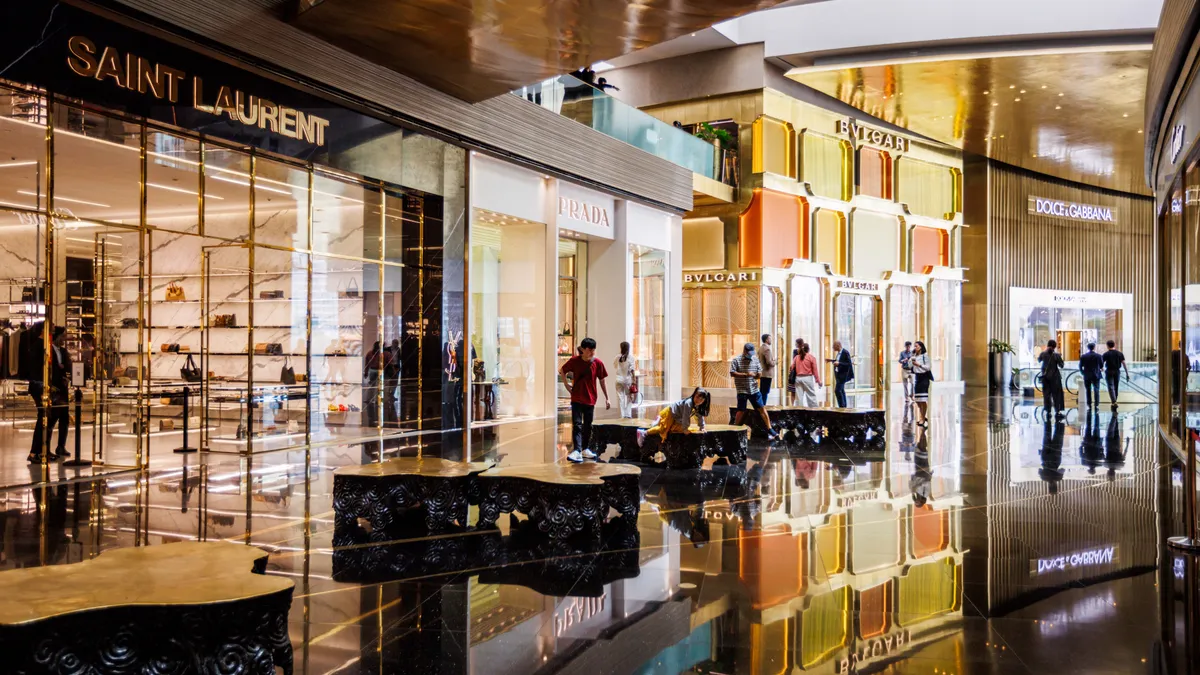
- The store remains the dominant channel for aspirational luxury customers to make purchases and have satisfaction with their experience, according to an EY survey of more than 1,600 consumers across 11 markets making $100,000 or more.
- Among this aspirational cohort, 71% purchase at brand-owned luxury stores. More than two-thirds say they are extremely satisfied with their experience — compared to about half of customers who were extremely satisfied with their experience on brand websites.
- “The store is still the cornerstone and the preferred purchase channel and the one that delivers the best experience,” Rachel Daydou, EY Studio+ France luxury, AI and sustainability leader, told CX Dive. “This is consistent with last year, and when we ask them what they are looking for and what makes their experiences in-store really valuable, 44% of them should say they chose in-store because of the pampering experience.”
Dive Insight:
For long-term growth and to maintain desirability, luxury maisons cannot exclusively rely on the ultrawealthy that habitually purchase their products. These brands must engage and convert aspirational luxury clients, according to EY.
Aspirational luxury clients ultimately want human interactions and unique experiences from the luxury brands they aspire to purchase from, the survey found. In-store experiences provide more of the emotional and human interaction and quality and curated service that aspiration clients value, while most brands struggle to replicate the same level of care online.
Customers said in-store pampering, human interaction and style recommendations were the top factors that would make store luxury buying more rewarding. The takeaway: these customers select spaces where they feel most recognized, guided and reassured.
Some luxury maisons are getting the online experience right, however, according to Daydou. The key is creating this experience for items that are not available in store.
“They do that for rare or for personalized products that you don't have access to in store, and so for me this is really a beautiful way where you don't replace the client adviser’s advice or suggestions, you don't replace touch and feel of the physical product,” she said. “You ensure that you can give access to something that's not currently in the store for whatever reason it is.”
Still, this aspirational cohort isn’t against technology. The vast majority, 94%, believe AI can enhance their shopping experience, with customers selecting enhanced online search and personalized recommendations as the most-desired use cases