Dive Brief:
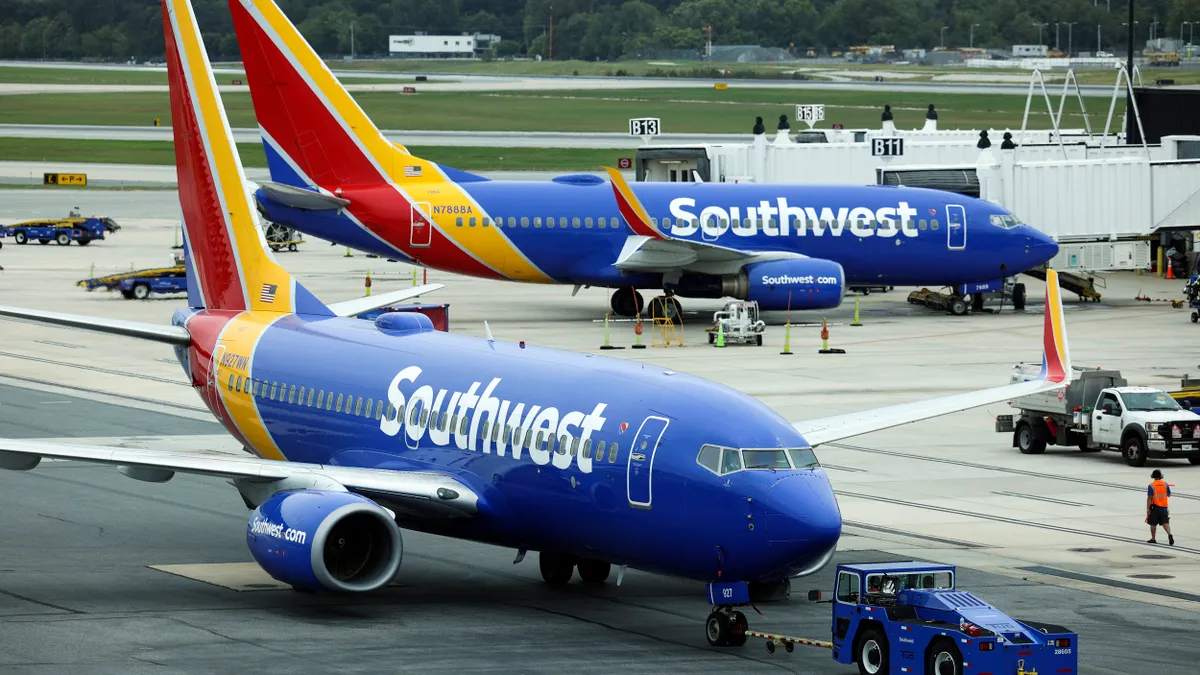
- Southwest Airlines completed its shift from open to assigned seating Tuesday, and customer response to the process has been positive, executives said on a Q4 2025 earnings call Thursday. The change included offering seats with extra legroom, too.
- Assigned seating is about meeting customers’ needs, not following other airlines’ pursuit of premium fliers, according to President and CEO Bob Jordan.
- “This has nothing to do with copying anybody,” Jordan said during the call. “This has to do with offering our customers what they want and then doing it even better, because we've got the employees and the service delivery and the reliability that they cannot match.”
Dive Insight:
Southwest expects its new seating policies to enhance its loyalty program while its reliability and hospitality will help the carrier continue to stand out.
The changes to Southwest’s policies, including the elimination of two free checked in bags last March, met mixed receptions from consumers. However, its net promoter score bounced back by October.
The looming switch to assigned seating didn’t hamper Southwest’s latest financial performance. The company reported record fourth quarter operating revenue of $7.4 billion, up 7.4% year over year, according to the earnings release.
Moving forward, Southwest’s flights now have more opportunities to offer Rapid Rewards members extra benefits, such as choosing a seat or checking bags for free, according to EVP and CFO Tom Doxey.
“One of the benefits is that we have more differentiation in our product and the ability to provide differentiation to those that are at different levels within the loyalty program,” Doxey said.
The seating changes bring Southwest more in line with what other carriers offer, but executives said they believe the brand will still stand out.
Southwest’s hospitality and reliability are a key part of the business, COO Andrew Watterson said. Their hospitality is reflected in the brand’s high net promoter scores, which is “extraordinarily difficult to copy.”
“You can tell your people to treat customers better, but if they don't, what do you do?” Watterson said. “For us, our employees want to treat customers well, and so these are the durable advantages of having great hospitality and great reliability.”