Dive Brief:
- United Airlines is confident that customers will remain loyal even as the carrier hikes fares in response to skyrocketing fuel prices, CEO Scott Kirby said on a Q1 2026 earnings call Wednesday.
- “We believe we have the ability to pass on the increase in fuel, due in large part to our brand loyal customers, continued demand strength, and preference to Fly United even at higher fares,” Kirby said.
- The carrier’s loyalty business continued to outperform, with total loyalty revenue increasing 13% year over year in the quarter, according to an earnings release.
Dive Insight:
A year ago, amid shifting tariff policies that sent consumer sentiment spiraling, Kirby laid out a strategic vision to build brand loyalty and boost revenue. Kirby shared the vision at a time when Southwest Airline’s changes to its marquee perks threatened its hold of brand loyal customers, presenting an opportunity for United to take the lead.
With rising fuel costs caused by the war in Iran, United is staying the course and investing in the experience throughout the cabin, confident that the brand loyalty it has built up will provide the ability to withstand cost pressures.
The business reported total operating revenue of $14.6 billion, a 10.6% year-over-year increase, and net income of $700 million.
Diverse revenue streams helped the airline stay in the green. In addition to its loyalty business, premium revenue increased 14% since the same period a year ago, business revenue 14%, and basic economy revenue increased 7%.
“And because we've positioned United for success, we can make tactical adjustments to manage what we need to in the short term, while also staying focused on our long-term plan,” Kirby said. “I'm also more convinced than ever that our decade-long strategy to build a great brand loyal airline that is obsessively focused on making travel easier and better for all customers is the winning strategy.”
Other carriers, including Delta Air Lines and Alaska Air Group, are looking to their premium products and loyalty programs to weather the fuel costs. But United says its experience initiatives aren’t solely focused on the premium cabin.
“To be clear, these changes have been in the works for years, and we are made across all aircraft, all cabins, and many different areas of the partial business,” Kirby said.
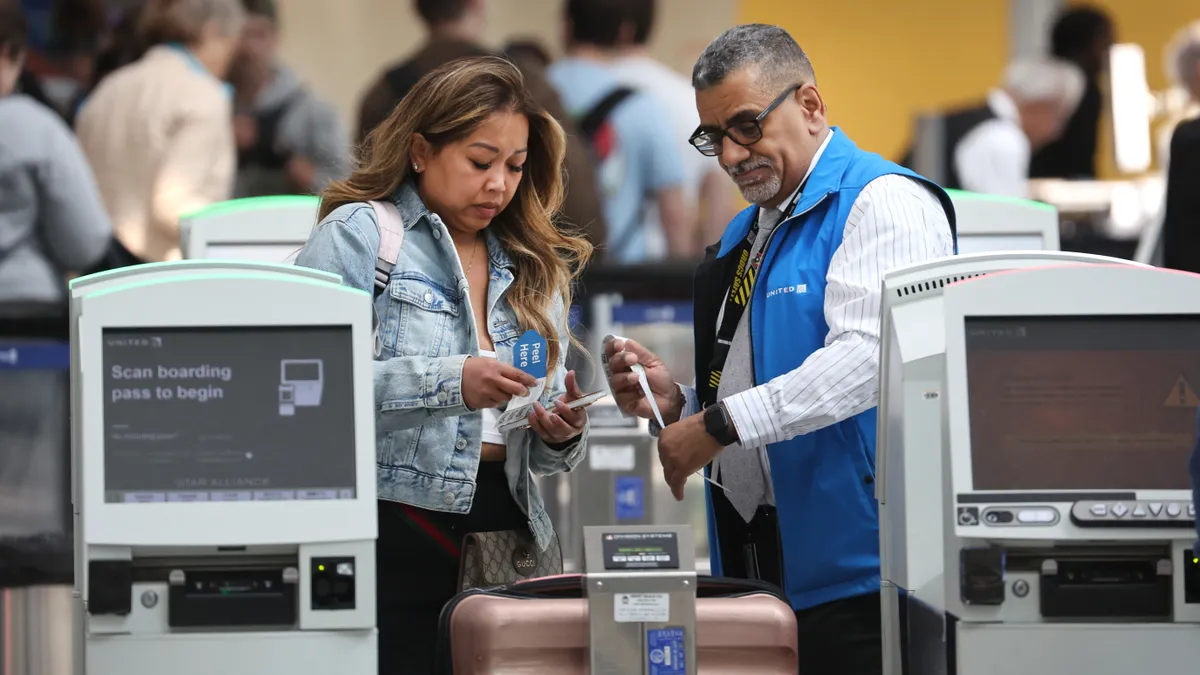
Self-service tools are one such example. A record 86% of travelers used the United app on their day of travel. Nearly 1.6 million customers used a feature to view TSA wait times in the app within the first two weeks it launched in April.
Solid operational performance helped drive the airline’s highest first quarter on-time net promoter score since the pandemic.
A string of commercial initiatives aims to further drive brand loyalty and increase revenue for United over the medium and long term.
Among those are how the airline displays and sells products on its digital channels, which has already led to large increases in upselling, according to Kirby. The airline has also introduced base fares in its premium cabin, and it plans on adding new aircraft and onboard products that focus on premium experiences.
Premium is still performing strong for United. Premium revenue per available seat mile grew 8.9% year over year, outperforming the main cabin by 4 points, Kirby said. “It is clear that consumers continue to seek elevated experiences.”