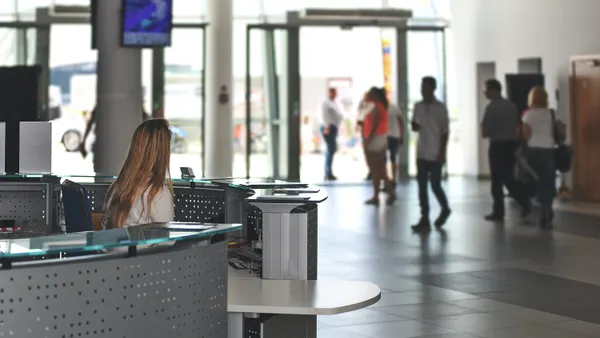

Solo dining occasions now comprise almost half (47%) of quick-service restaurant occasions, up by more than 50% since 2021, when solo dining accounted for 31% of QSR occasions, according to data from a Yum Brands report on major consumer trends.
Yum Brands’ Chief Marketing Officer Ken Muench told Restaurant Dive that cultural factors are reshaping consumer demand for restaurant occasions.
Muench posited, based on data collected by Yum’s in-house data analytics team, Collider Labs, that three major shifts are ongoing for consumers right now.
First, consumers are shifting toward premium, solo occasions within QSR — Yum’s data shows that more than half of solo occasions produce checks in the $10-$30 range, with orders overindexing on snacks and drinks. Consumers are also shifting from group dining to solo dining, changing the consumption patterns for socially oriented dishes, like pizza and wings.
Second, consumers are using customization as a means of exerting emotional control over their lives, in a broadly unstable socio-political context, Muench said.
Third, consumer value perceptions are shifting away from price toward factors like aesthetics and perceived coolness.
“These three [factors] are really fascinating because they're really contextually critical at the moment with what's happening with the world, and the lack of predictability, lack of control, and the sense consumers have,” Muench said.
This particular historical contingency meant Yum was interested in sharing the results of its Collider Labs data with the public, Muench said. The company has produced similar reports since 2014, but this is the first time it has gone public with the results.
How customization reshapes value
Yum’s report found that solo diners do not always exploit discounts — 68% of consumers reported not taking advantage of deals. Solo dining, then, Yum said in the report, is more about “little luxuries for self care,” rather than price-based deal-seeking.
Because of the emotional weight diners are putting on food, customization has become more important, Meunch said. According to the report, customizable meal boxes and bundles are one important way for consumers to attain that sense of control.
“Build Your Own and Cravings Box concepts consistently outperform purely convenience-led ideas because they give consumers the power to design their perfect meal,” the report said.
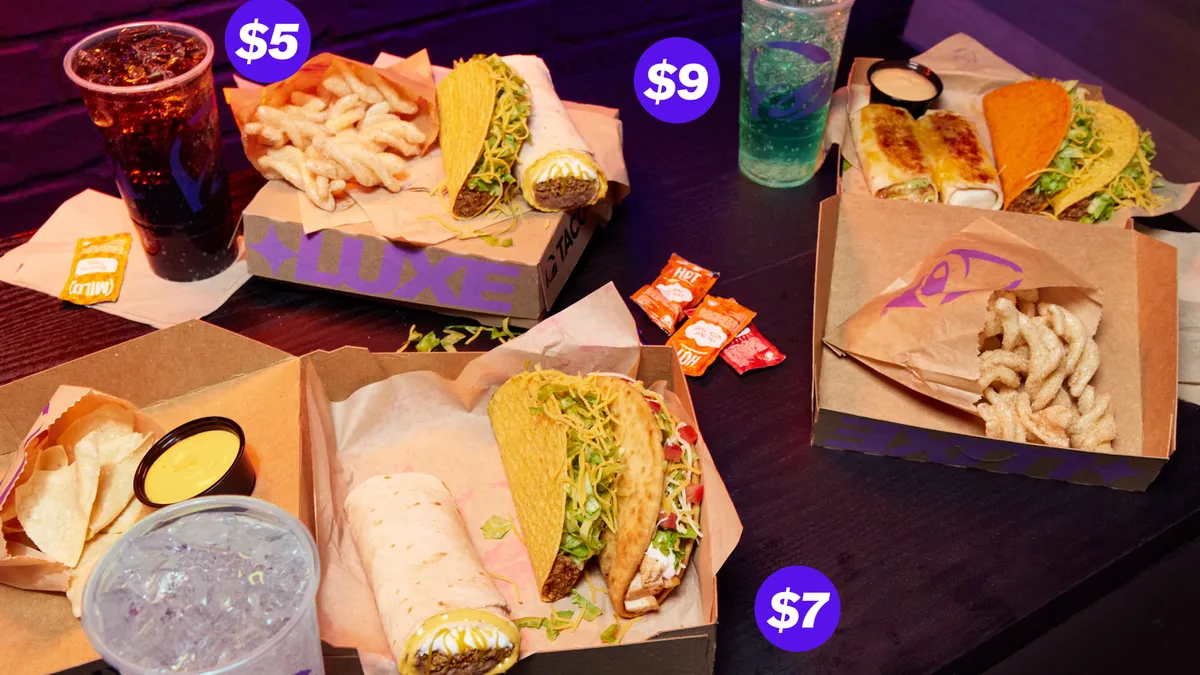
Yum attributed some of the success of Taco Bell — the brand has posted quarter after quarter of same-store sales growth, including a 7% increase in Q3 — to the flexibility of the Luxe Cravings Box platform. Those Luxe Boxes, Muench said, give consumers the ability to choose elements of a meal without imposing a paralyzing variety of decisions.
Consumers are opting for customizable spice levels, dipping sauces and other flavor tweaks, as well.
“In moments of stress, sauces act as emotional pick-me-ups,” the company argued.
Many QSR brands have added to their sauce repertoires over the last year. Popeyes, a Restaurant Brands International chain, added a signature sauce to its menu over the summer. The launches of both McDonald’s and Wendy’s chicken tenders this year included signature sauces.
Consumers who feel greater control over their experiences may be more likely to spend more on average, about 48% of occasions where consumers seek out customization have checks greater than $20, according to Yum’s presentation.
That premium pay for custom experiences is helping fuel Yum’s third trend — consumer perception of value as something beyond price. Muench said that in previous historical eras the price point predominated in value perception, but customization, social media hype and other forces are restructuring diners’ relationship to food.
“Food is acting as a sort of form of self expression, as this thing that makes you enjoy a social environment,” Muench said. “Because of that, then, I'm not just doing the math on the pounds per dollar. I'm doing the math on ‘how does it make me feel?’”