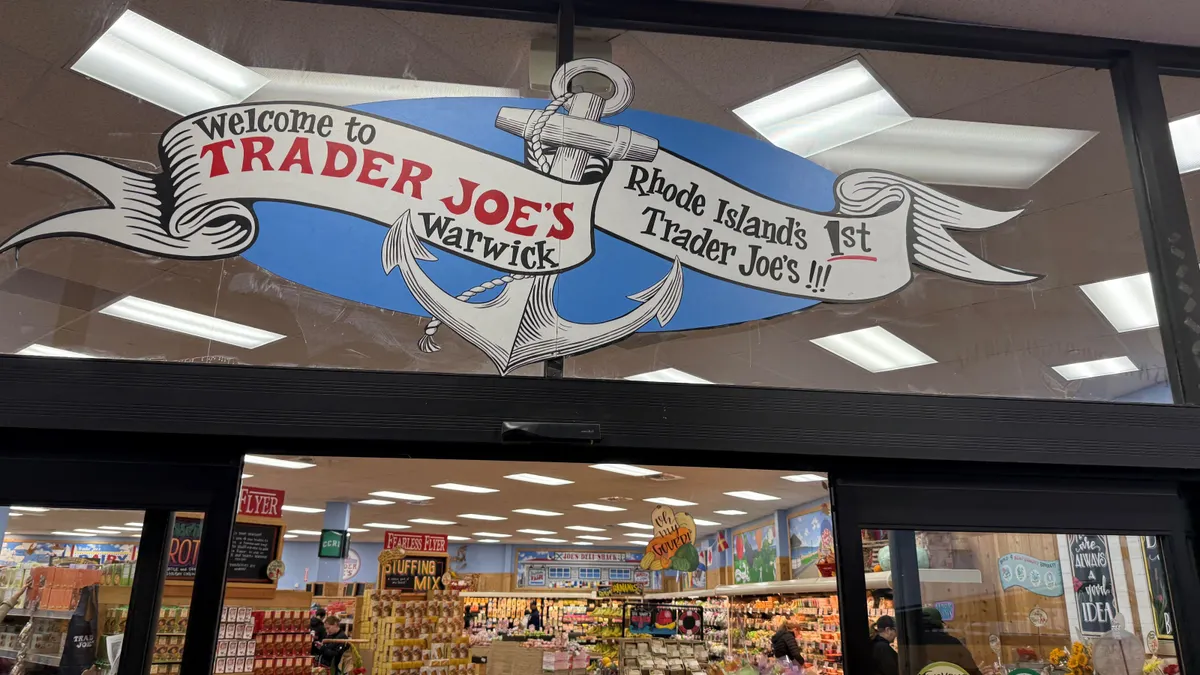
Trader Joe's has the highest loyalty among U.S. grocers, even though it doesn't have a loyalty program. That's because loyalty is a strategy, not just a program, experts say.
Rather than investing in a costly, complex loyalty program, Trader Joe's relies almost exclusively on its private-label products, high-touch customer service and everyday low prices to drive loyalty.
"You don't have to be part of a special club," Matt Sloan, vice president of culture and innovation at Trader Joe's, said on the company's "Insider Trader Joe's" podcast in 2023. Trader Joe's declined requests to comment for this story.
The chain is an outlier at a time when a growing number of restaurants, grocery stores and mass retailers have launched or revamped loyalty programs. By nearly every business measure, those programs are working — enrollment is growing, members account for a larger share of revenue and return on investment continues to improve, according to the 2026 EY Loyalty Market Study.
But that doesn't mean these programs build loyalty on their own. Just 48% of those surveyed say a loyalty program makes them feel more positive about a brand, down from 67% two years ago, according to the study.
That's because people mainly join loyalty programs for the discounts and to avoid feeling "dumb" for missing out on deals that members can access, said John Pedini, principal analyst at Forrester.
"Most of the folks signed up for those programs are not necessarily loyal to that brand. They're loyal to their own wallets," Pedini said.
Customer experience is far more important for loyalty.
"If the app is frustrating, if resolving an issue takes too much effort or if redeeming rewards feels harder than it should, another offer or another discount isn't likely to change how customers feel about that relationship," said Patricia Camden, managing director of EY Studio+ Customer Experience and loyalty leader for EY Americas.
'A means to an end'
Trader Joe's private-label products are essential to the brand's loyalty strategy, with items like its Mandarin orange chicken developing cult followings among customers. In fact, as of early 2023, more than 80% of the products available in its stores are private label.
"The best loyalty program is not as good as the best products," said Brad Jashinsky, director analyst at Gartner.
In addition to driving store traffic and higher profit margins, Trader Joe's reliance on private label also increases the potential costs of operating a loyalty program, as it cannot rely on manufacturer-paid discounts to fund one as other grocers do.
But Trader Joe's doesn't see that as a loss because such discounts often lead customers to chase deals rather than "engender loyalty," Tara Miller, vice president of marketing at Trader Joe's, said on the company's podcast in 2023.
Trader Joe's already has what many brands are buying when they invest in a loyalty program: customer touchpoints.
Most people shop for groceries at least once a week, giving Trader Joe's countless opportunities to earn repeat purchases, collect data on what they buy and deepen the relationship. On top of that, many of the brand's customers started shopping at Trader Joe's with their families as children, creating organic loyalty growth.
"Loyalty programs are a means to an end," Pedini said. "For brands that are inherently customer obsessed, for brands that have already found their differentiation, programmatic loyalty may not be needed."
However, companies that only interact with customers occasionally, such as apparel or furniture brands, often benefit from a loyalty program because it's easier for customers to forget them or switch to a competitor. So, they need to create additional touchpoints.
Brand positioning also plays a central role.
Value brands like Trader Joe's and Walmart need to offer everyday low prices because it's core to their brand, which limits the potential impact of a loyalty program. Luxury brands, which rely on product quality and exclusivity to attract consumers, must also tread carefully with loyalty programs, as discounting could put their reputation at risk.
But for brands in the middle and in markets where most competitors offer robust loyalty programs, such as airlines and hotels, loyalty programs are "nearly mandatory" to remain competitive, said Bobby Stephens, principal in Deloitte Digital's retail and consumer products practice.
Loyal to the customer
A loyalty program can reinforce a strong customer relationship, but it cannot manufacture one, experts say.
As a result, most brands should ensure they're delivering on their core promises before adding a loyalty program.
"If your house is on fire, you shouldn't be thinking about redecorating. You should put out the fire first," Jashinsky said.
That's even more true today than it was just a couple of years ago, as consumers become more selective about the loyalty programs they participate in. Nearly 90% of consumers participate in 1 to 10 programs, a seven-point year-over-year decline, according to the 2026 EY Loyalty Market Study.
The most effective programs solve a customer pain point rather than reward transactions, experts say. When Hertz redesigned its loyalty program, consumer research revealed that customers didn't want more points — they wanted a rental experience that didn't frustrate them. So, the program was rebuilt around solving that, allowing higher-tier members to bypass the rental counter and, at some locations, choose their own vehicle.
"It may not cost as much as you think," Pedini said.
There are three prerequisites for succeeding without a program, according to Stephens: a broader cost-and-efficiency strategy; a distinctive product or experience; and alternative ways to capture customer data.
Trader Joe's has all three.
While a loyalty program would allow the brand to track its customers' purchases in greater detail, the company says it's not worth the cost.
"We're not tracking individual customer purchases, but we are tracking whether or not a particular product sells well," Miller said. "And if it doesn't, that's our customers voting with their collective dollars telling us, yeah, that's not something we love."
In contrast, Pedini's regular grocery store closely tracks his purchases and sends him personalized offers for the bakery section, since he rarely shops there. But it's unlikely to make a difference.
"I just don't like their bakery. I go somewhere else," Pedini said.
That's what happens when brands operate in silos.
"In most companies, loyalty sits within marketing, while customer experience usually spans digital, operations, customer service and product," Camden said. "Customers don't experience those functions separately – they experience one brand."
That's why Trader Joe's views loyalty from the customers' perspective, focusing on delivering a consistent experience through its products, prices and service.
"I think other retailers … presume that the loyalty in question is coming from their customers," Sloan said on the podcast. "We think of loyalty as something … that we have for our customers. We are loyal to our customers."