Dive Brief:
- Customers are three times more likely to use a third-party generative AI tool than a brand-owned chatbot for customer service, a Gartner survey of more than 3,500 B2B and B2C customers found.
- The number of consumers using third-party generative AI tools has doubled in the past year alone, according to Eric Keller, senior director analyst in Gartner’s customer service and support practice. However, there has not been a statistical increase of customers using company-provided chatbots since 2022.
- “So a doubling of third-party AI, no increase in customer service chatbots — it definitely should give pause to leaders who are thinking that the future of customer service is in these company-owned AI chatbots,” Keller told CX Dive.
Dive Insight:
Countless brands have rolled out AI chatbots, from Airbnb to Verizon. But whether or not consumers are keen to use them is a point of discussion.
“If customers are already using your chatbot and engaging with it, then enhancing that chatbot with AI and helping it resolve more issues, that's a good thing,” Keller said. “If customers are not already engaging with your chatbot, simply putting AI in that chatbot is probably not going to drive more engagement. So you really need to drive intentional adoption strategies.”
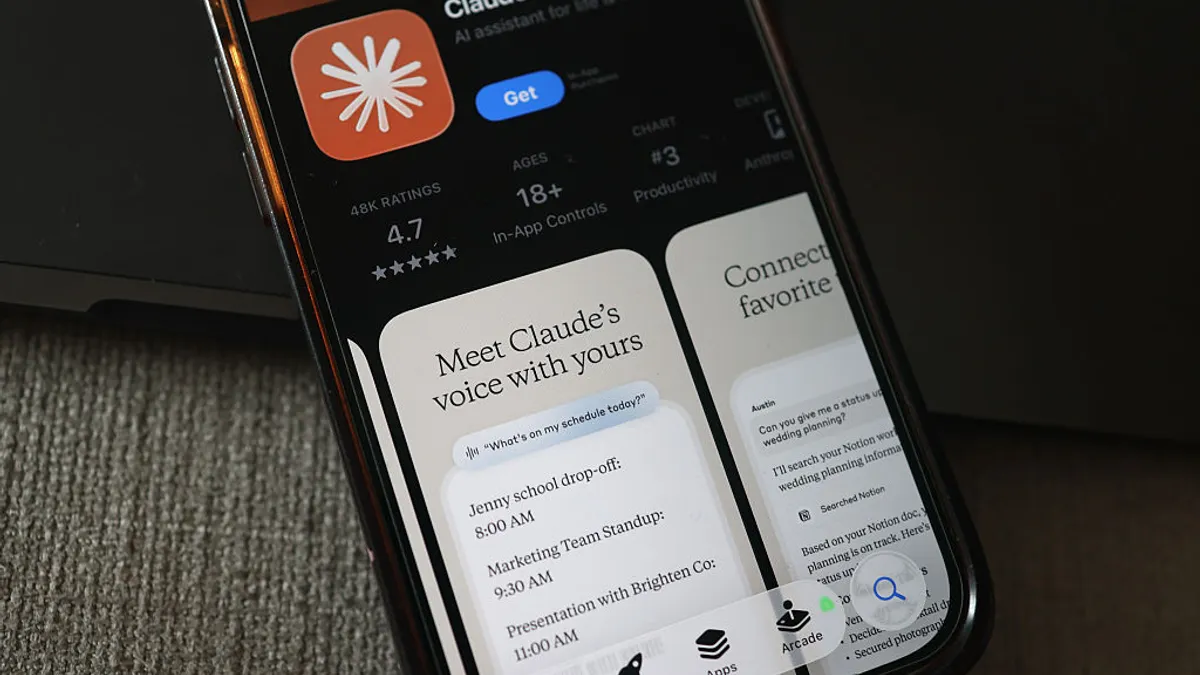
AI has become much more prevalent in consumers’ lives. Two-thirds of consumers use generative AI — third-party tools like Claude, work assistants like Copilot and AI chatbots on a brand’s website — in their personal life, work or both.
But most of that usage is among third-party AI tools.
That preference reflects not only the comfort the customers have with third-party tools like ChatGPT and Claude, but also the quality of them, according to Keller.
“They use these tools in every aspect of their life, and they increasingly trust those tools and trust the responses that they get,” Keller said. “So it makes a lot of sense that when they experience a customer service issue, they turn to this tool that they use every day rather than going to a chatbot on a company's website that they don't use often.”
Far too often a brand’s generative AI customer service investments don’t align with customer behavior, leading to disappointing ROI results. There are two spaces where brands' chatbot strategies are missing the mark and where they can improve: taking action and presentation.
Customers use generative AI to answer questions and take action. Well over half of customers — 58% — have used it to complete a task, and nearly three-quarters of B2B customers have used it to accomplish a task, Gartner found.
“That's where the brand's chatbot is uniquely positioned right now because you can't do that through ChatGPT,” Keller said. “But often the brand's chatbot will just simply answer questions. And then if you want to transact, if you want to make an update, if you want to add something, if you want to change something, it's going to send you a link to go somewhere else on that website and do it. That's a missed opportunity.”
Brands can also improve the design and presentation of chatbots.
“I think the presentation of this kind of little chatbot that pops up in the bottom right-hand corner of the screen, it's starting to feel a little outdated,” Keller said. “So the approach that we're seeing from more progressive companies, it's almost like the entire digital experience becomes a single intelligent front door, kind of not a standalone chatbot, but the entire digital experience is in AI powered conversational interface.”
Instead of a homepage of the website that provides a list of headers and links and different places to navigate, leading organizations are providing more of a conversational experience than a navigational experience, Keller said.
Perhaps it takes the form of a search box that asks, “What are you trying to do with us today?”