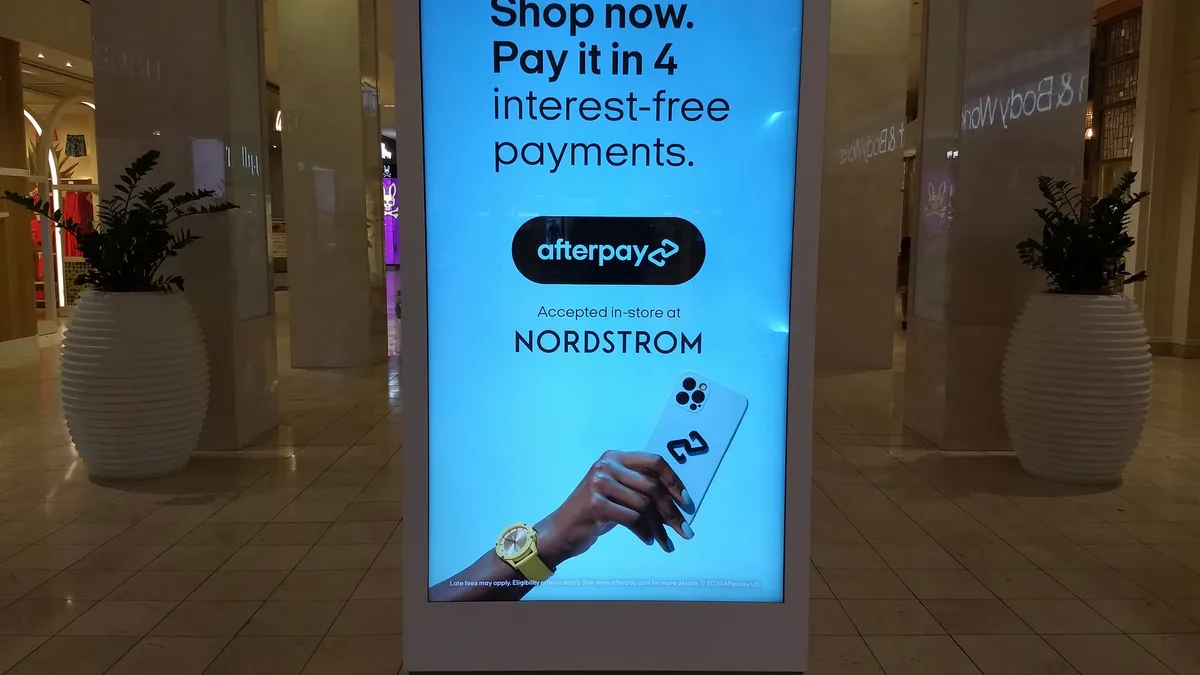
On Cyber Monday, U.S. consumers spent a record $1.03 billion using buy now, pay later. The short-term financing option helped buoy holiday sales despite mixed economic signals, including low consumer confidence, persistent inflation and a soft job market.
That’s because BNPL makes the checkout experience easier.
“It's telling the customer, ‘We get your reality, we understand where you are, and we've designed this experience and this ability to pay to meet you where you are,’” said Patricia Camden, managing director in the EY Innovation and Experience Design practice and EY Americas Loyalty Leader.
The result: Consumers are more likely to buy and spend more when using BNPL.
"You're keeping the customer in that moment of excitement instead of allowing them to pause and let their better angels convince them that they should think a little bit more,” Camden said. “It's giving the consumer some psychological breathing room — the cost doesn't change, but they feel better about it."
As a result, BNPL products have become increasingly popular with merchants and consumers alike, but whether the payment option is good for the overall customer experience is a matter of debate.
BNPL rises with inflation
These short-term loans allow shoppers to pay for products in small installments over a set period. The U.S. Federal Reserve Bank of Richmond cited several key differences when compared with credit cards in a report from last January:
-
Instead of a revolving line of credit, BNPL products are installment loans with a down payment due at the time of sale and a fixed repayment schedule.
-
BNPL loans are offered through retailers and tied to the purchase of a specific product.
- BNPL companies typically offer easier lending terms, with no or limited credit checks, zero interest, and no or limited adverse reporting to credit bureaus.
However, BNPL isn’t just a payment method. It’s also a way for consumers to get better deals, which increases their purchasing power, according to Vishal Kapoor, SVP of product at BNPL provider Affirm.
"Customers are abandoning some of the cards in favor of BNPL because they want to know exactly what they're going to pay. Otherwise, with the card, you can just keep revolving, and you never know how much you are stacking the debt,” Kapoor said.
As inflation continues to squeeze consumers, they’re beginning to cross-shop payment methods to find lower financing costs and spread out payments over longer periods. It’s similar to how people shop for home mortgages.
But that may be bad news for retailers in the long term, even as the payment option boosts sales and customer acquisition in the near term.
More and more people, especially those who are lower-income, younger and a higher credit risk, are turning to BNPL to pay for necessities. In fact, one-quarter of BNPL users have used short-term loans to pay for groceries, according to an April survey by LendingTree. A November survey by The Motley Fool found that nearly 3 in 5 BNPL users rely on it to buy items they otherwise couldn’t afford.
“Buy now, pay later is becoming a lending mechanism of last resort,” said Joe Fielding, partner in the financial services practice at consultancy Bain & Company.
In addition, more than one-quarter of U.S. consumers regret using BNPL due to unexpected costs, according to The Motley Fool. A similar share of BNPL users have missed payments, signaling potential financial strain, the survey found.
The resulting financial stress could eventually impact customer experience, even though “BNPL delinquency rates so far do not seem particularly high when compared to traditional consumer credit products,” according to the Richmond Fed.
That’s because BNPL hasn’t been tested by a true economic downturn yet. When that inevitably occurs, overextended consumers will be more likely to miss payments, return items and request refunds, according to Fielding. As financial strain exposes operational weaknesses, customer experience will “fall off a cliff.”
“If you have a smooth checkout, but the returns experience is a nightmare, your loyalty and experience will be damaged,” Fielding said.
With more consumers using BNPL than ever, this year’s holiday shopping season could begin to stress test retailers’ return and refund processes, according to Camden.
Brand reputation can also become “commingled” with BNPL provider reputation, as customers associate their purchase experience with how their BNPL provider treats them, Fielding said. “A bad collections experience, for example, reflects on the merchant.”
Take late fees and unclear BNPL terms. "Nothing will erode trust faster,” Camden said.
Affirm’s Kapoor says it takes into account the likelihood of a customer being able to pay back its loans. In addition to publicly available data, Affirm uses proprietary data and analytics to underwrite each transaction, which reduces the likelihood that a consumer will take on too much debt and miss payments, according to Kapoor.
"If they fall behind in their payment, we actually lose money because we don't charge any late fees,” Kapoor said. “So as soon as a particular customer goes behind, we have to fine-tune our models to make sure that doesn't happen."
But that can negatively affect customer experience when BNPL providers accept a loan application from a specific customer one week but not the next.
BNPL best practices
Retailers should carefully evaluate BNPL products before adding them as options, but many don’t, experts say.
"It's too easy to be swayed by the promise of the extra revenue and the new customers without thinking fully through all the complexities. It's not nearly as easy as people think it is,” Camden said.
While just about any retailer can offer BNPL products, they are best suited for retailers selling mid- to high-ticket discretionary items, such as fashion, electronics, home goods and furniture, where payment flexibility reduces friction.
Brands offering low-ticket, commoditized and frequent purchases should avoid BNPL in most instances, according to experts, even as brands like DoorDash and Taco Bell have partnered with Klarna to allow consumers to pay in installments.
Brands can maximize the benefits and minimize the risks associated with BNPL products by taking some precautionary measures:
- Ensure transparency regarding costs, payment schedules and refunds. “Show the price and the APRs up the funnel, and then make sure there are no surprises or no guesswork down the funnel,” Kapoor said.
- BNPL should be an option, not the default, as nudging consumers could harm the most vulnerable, potentially damaging lifetime customer value and brand reputation.
- Ensure seamless returns and refunds.
- Vet your BNPL partner to understand their underwriting process and customer service reputation.
- Monitor underwriting change, as BNPL providers may tighten their approval criteria, especially during economic downturns.
Regardless, businesses and consumers are currently in a “honeymoon phase” that could soon end, Camden said.
“There hasn't been a recognition that there's actually a lot of risk in this process — not just the inherent risk from it being a loan, but the risk to your CX," she said.