Dive Brief:
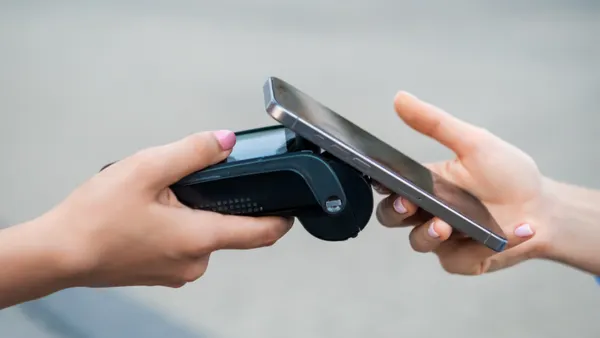
- Consumers value the convenience of frictionless payments, from digital wallets to buy now, pay later options, but the overall impact on customer experience is murky, NMI’s "Psychology of Payments” research found.
- Frictionless payments alter consumer behavior and spending, increasing the amount they spend and shopping frequency, according to the survey of 1,000 U.S. adults.
- Nearly half of consumers — 48% — say they spend more at checkout when the process is fast and frictionless. Just over half of consumers — 52% — say they shop online more frequently because of perks like gamified loyalty programs, cashback offers and buy now pay later options.
Dive Insight:
Fast, frictionless payments are becoming table stakes, especially among younger generations and busy parents, even as consumers admit to overspending with easy payment options.
Among Gen Z consumers, nearly three-quarters — 72% — say they shop more frequently with frictionless payments. That rate remains high among parents with kids under 25, with two-thirds saying they shop more frequently.
“Your Gen Zs, and your Gen Alphas even, are coming up just so familiar with seamless checkout that they expect it,” Tiffany Johnson, chief product officer at NMI, said. “That really drives a lot of loyalty, whereas older generations that didn't grow up with it are less sensitive to it.”
Among all consumers, just over half say they would prefer “secure, one-click online checkout over a slower in-person interaction with a cashier.”
Such findings might tempt businesses to make checkout as frictionless as possible to increase average order size, but there are consequences to speeding consumers through checkout as fast as possible.
One-third of consumers recognize that digital payments have made them more disconnected from their finances and more likely to overspend. Among Gen Z consumers, 29% say their perception of money has worsened with frictionless, digital transactions making spending feel “less real.”
Experts discussing buy now, pay later options told CX Dive that if consumers experience regret, it can result in higher return rates or erode brand reputation.
Johnson acknowledges the quandary of consumer overconsumption but says businesses can’t risk falling behind when consumers value payment convenience.
“Is it a good thing to get consumers to spend more, especially in an economy where the consumer price index is up and spending is a bit tight?” Johnson said. “But if you're not doing it, you're not competitive either. So if you're not making it an easier experience, then consumers are just going to go elsewhere.”
Instead, Johnson encourages issuers to provide consumers with financial education.
“From the merchant side, it's table stakes if you want to keep the clicks and the eyes,” she said.