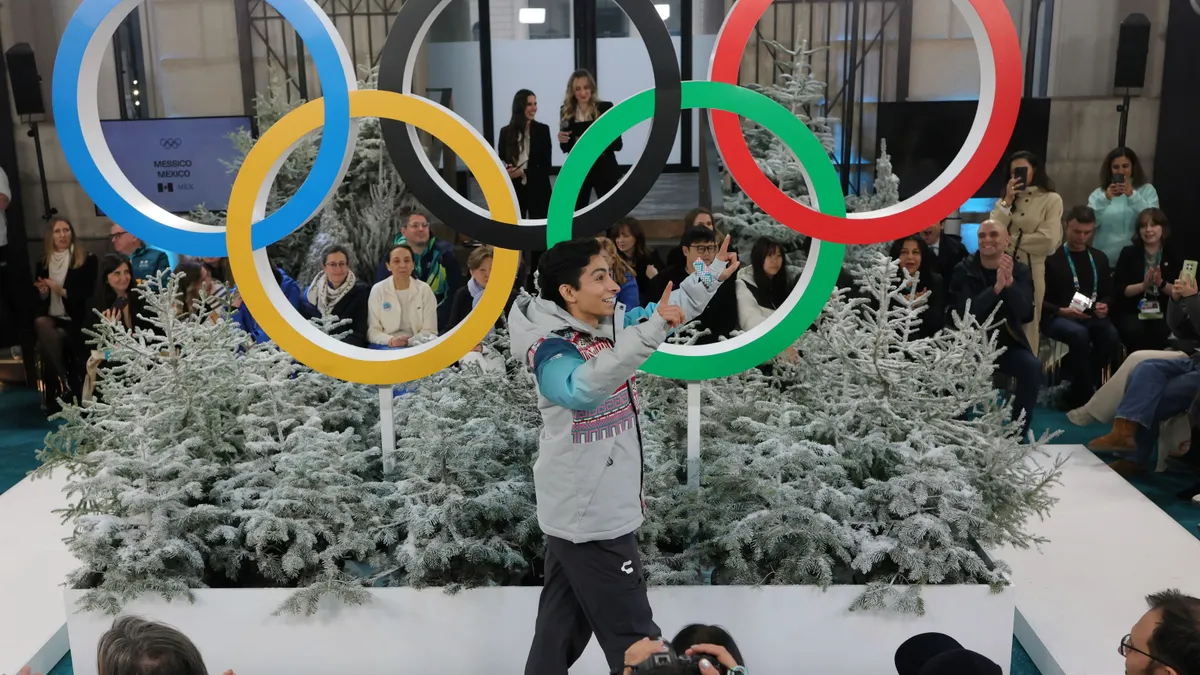
When athletes lit the Olympic cauldron in Milan Friday, it officially marked the start of the 2026 Winter Olympics. But the work to engage fans for the Winter games has been taking place since the closing flame ceremony of the Summer games two years ago.
This flame-to-flame period is critical, according to Michelle McGuire Christian, digital experience lead and recently named chief data and AI officer for the Deloitte US Olympic & Paralympic Partnerships. The primary vehicle for digital engagement is the International Olympic Committee’s customer data platform, or fan data platform, developed with Converge by Deloitte for Sports.
Since its release prior to the 2024 Paris Olympic games, the fan data platform has been chugging along, allowing the Olympic governing body to identify correlations between audiences of the Summer and Winter games and engage them with personalized, relevant content from one Olympics to the next.
“That was always the mission of the fan data platform: to serve fans, to make their experience more personalized and engaging and relevant for them, as fans of the rings and of sport and of specific athletes or teams,” McGuire Christian said.
The Olympics had an existing data lake prior to the fan engagement platform, but it wasn’t connected on the back end and integrated across platforms, causing outreach to be more generic. Each games, the IOC had to start engagement all over.
But since the rollout of the fan engagement platform, the 2024 Paris Olympic Games became the most followed games ever, with 84% of the potential global audience, roughly 5 billion people, following the events, according to the IOC. It also saw nearly four times the engagement of the 2020 Tokyo games.
Personalizing outreach
Through the fan engagement platform, which is compliant with the European Union’s General Data Protection Regulation, the IOC has been able to segment audiences and offer fans updates and outreach that matches their interests.
Fans can create a profile on the Olympics.com and opt in to share what sports they care about, what countries they follow, by which channels they would like to hear more, or even whether they want to volunteer.
“That's really the goal is to think about it more holistically in engaging with fans,” McGuire Christian said.
It also helps customize communication. Nearly 70% of consumers are more likely to purchase from a brand that personalizes its customer experience, according to Deloitte research. Sports fans are no different.
“Consumers prefer a tailored message, and that includes sports fans,” McGuire Christian said. “They prefer a personalized message when it's relevant to them and prefer the message based on the information [they] shared. It's important to them in terms of overall customer satisfaction and what we call a fandom score.”
But can personalization backfire and fail to expose fans to sports they might find interesting but don’t usually engage in? A fan may show interest in, say, bobsledding or curling only during the Winter Olympics.
“The IOC now wants to use your enthusiasm about curling with the flame long after the Olympics leave Milano,” McGuire Christian said. “When you obviously opt in and you tell them you like curling, or you followed it on social, whatever that might be, they want to now use your enthusiasm for other than the 18 days of the Winter games in a way that makes you feel connected to the flame.”