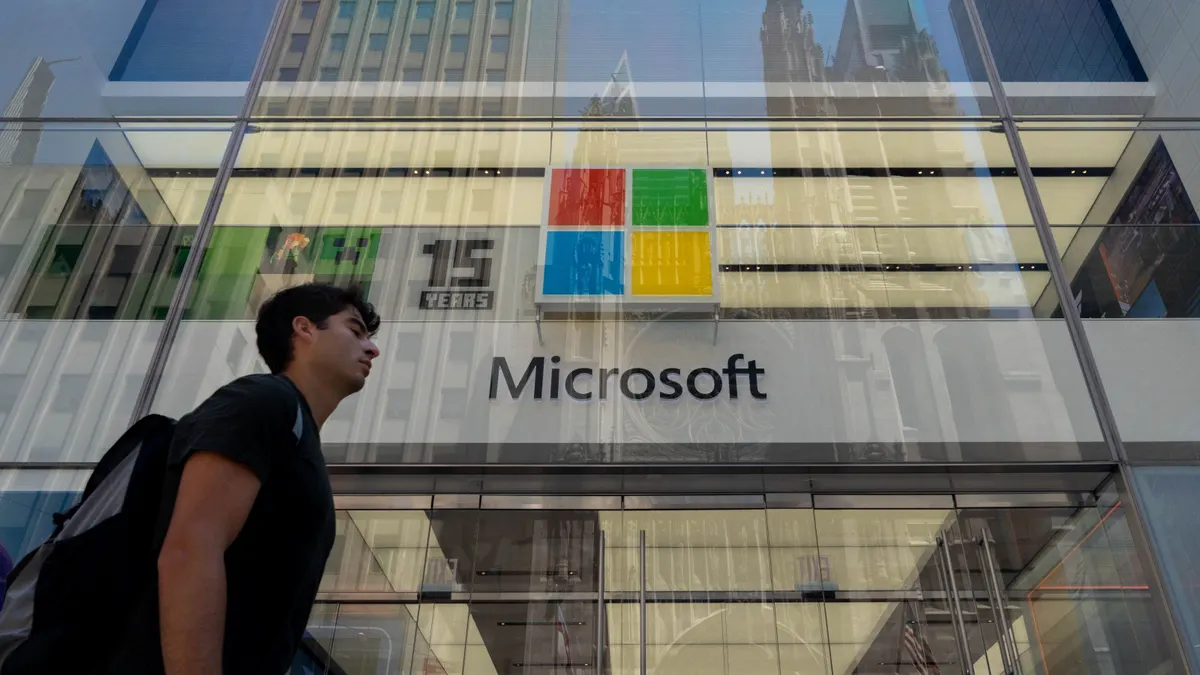
Microsoft’s outage impacted companies and governments around the world, as services like Outlook and Teams were unavailable Thursday and into Friday. The outage caused ripple effects, blocking some customers from reaching services and goods.
“It’s hugely negative for customer experience,” said Bill Pearce, a faculty member at the University of California, Berkeley’s Haas School of Business, and former CMO at Del Monte and Taco Bell.
In Canada, VIA Rail Canada told passengers on X that they “may not be able to receive email communications about their trip,” encouraging passengers to instead use the VIA Rail train tracker or subscribe to SMS notifications for the most updated information about their train.
In the UK, a National Pharmacy Association spokesperson told the BBC that people could face delays getting their prescriptions, as the outage affected the National Health Services’ email systems.
Then there was the issue of Microsoft’s Dynamics 365 Contact Center being down for nearly eight hours starting Thursday, CX Today reported. Some contact center agents were unable to sign in to the platform and could not send or receive messages or calls. Those who could experienced degraded messaging and voice capabilities.
Microsoft’s platform is closely intertwined with how many companies conduct their business — and its impact on the customer experience is glaring. Businesses need to communicate to consumers about the outage and its causes, and once services are restored, consider next steps to make it up to customers, experts told CX Dive.
“It’s not just about the product being unavailable, it’s about everything your customers are unable to accomplish as a result,” Jon Picoult, founder and principal of Watermark Consulting, told CX Dive in an email.
The outage impacts a key aspect of customer experience: reliability.
“Reliability is a cornerstone of the customer experience, in any industry,” Picoult said. “Without good reliability, it’s going to be near impossible for a business to build loyalty with its customers.”
Communicate, communicate, communicate
Many outages, Microsoft’s included, are out of brands’ control. What is within their control is how they communicate with customers.
“Outages are never good for the customer experience, but it’s the absence of communication that can really amplify negative sentiment,” Picoult said. “Provide regular status updates — even if no new information is available — and convey estimated timeframes for resolution if at all possible.”
When an outage impacts the main communication channel brands use — such as those who rely on Microsoft’s Outlook services — they should have other avenues for getting in touch.
“It underscores the value of obtaining multiple pieces of contact information from customers, such as an alternative email address or mobile number for texting,” Picoult said.
What organizations say also matters.
Pearce points to the NHS, a mission critical organization, and what their messaging might look like.
“It would be untoward for them to say, "Hey, this is Microsoft," but they also need to kind of explain that it wasn't [them],” Pearce said.
That message ought to sound cooperative, he said, along the lines of: "Hey, many of you are aware of the Microsoft Outlook outage. Here's how it's impacting the NHS. Here's what we're doing about it. We recognize this is a tremendous inconvenience. We're working to fix this with Microsoft.”
“They can't just serve Microsoft under the bus,” Pearce said. “People are going to say, ‘Yeah, but you're the NHS.’”
No matter the organization, brands should make sure that they’re communicating how they’re trying to fix the situation.