Dive Brief:
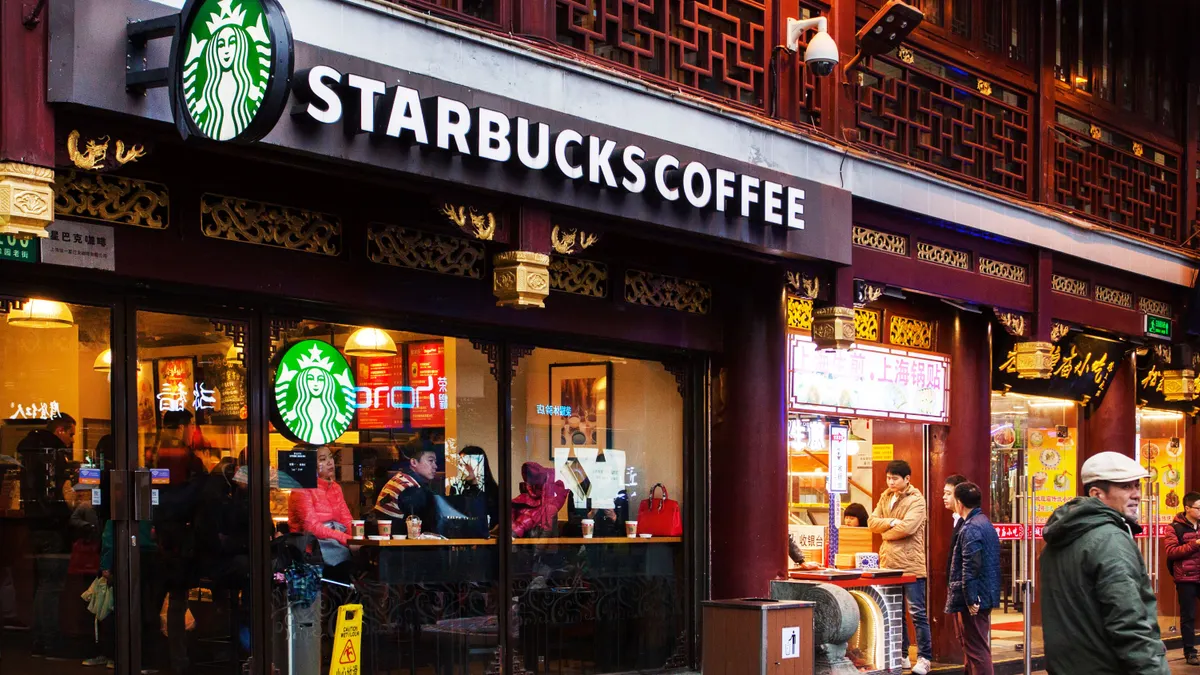
- Starbucks’ loyalty program is growing membership and driving frequency following changes that went live in March, executives said on a Q2 2026 earnings call Tuesday.
- In the United States, 90-day active Starbucks Rewards membership grew 4% year over year to a record 35.6 million, according to CFO Cathy Smith. Membership is up from the previous quarter, too.
- The new 60-point reward, which offers a $2 discount on any item, has become Starbucks Rewards’ most-used benefit, according to CEO Brian Niccol. The option accounts for about one-third of all loyalty point redemptions.
Dive Insight:
Starbucks executives are pleased with the coffee chain’s loyalty performance, which had previously suffered from an overreliance on discounts.
The updated version is designed to help drive demand and guide customer routines. Starbucks is “encouraged” by member engagement across all of the program’s newly added tiers, Smith said. The rate and volume at which U.S. customers are loading money into the digital card on their accounts has exceeded expectations.
A growing number of customers are visiting four or more times a week since the loyalty relaunch, which is a sign that Starbucks Rewards is once again positioned to be a growth engine, according to Niccol.
“I think it demonstrates you don't have to make our rewards program a coupon book, which is where I felt like where we were when I first got here,” Niccol said on the call. “We had to stop doing all that discounting. This needed to be about engagement. This needed to be about personalization, and this needed to be about recognition.”
The loyalty growth mirrors positive sales results. Global comparable store sales rose 6.2% year over year in the second quarter of 2026, according to an earnings release. U.S. comparable store sales were up 7.1% year over year.
While Starbucks Rewards is going strong, it isn’t the only factor driving growth. The Green Apron Service strategy, which includes an updated staffing model and standards for interacting with customers, continues to pay off, according to Niccol.
Customer experience metrics remain on the rise, and speed of service is improving as well, Niccol said. About 80% of stores are hitting the targeted order fulfillment times of four minutes in the cafe, four minutes in the drive-thru, and 12 minutes for mobile order pickup.
In May, Starbucks will roll out a scheduled ordering feature on its app that lets customers choose their pickup time, according to Niccol. He expects this feature will increase predictability for mobile orders.
Operational, experience, marketing and menu improvements should all help Starbucks weather the uncertain economy, according to Niccol. While Starbucks hasn’t seen a change in customer behavior yet, the company expects its strategy to win customers in any economic environment.
“This is one of those things I believe what we see with folks is when you give them an experience that they feel is unique, differentiated, special, a little touch of luxury, it goes a long way,” Niccol said.