
A real-time analyst spots an adherence miss and messages the agent. A planner pulls historical volumes to build next quarter's staffing plan. A scheduler opens a spreadsheet to balance coverage against fairness rules. This is how workforce management has worked for 30 years and every step still requires a human to notice something before anything happens.
Agentic workforce management changes that model. When WFM data, AI and automated actions are connected, the system monitors continuously, surfaces what matters and acts on routine tasks before anyone has to ask.
What does "agentic" mean in WFM?
Agentic WFM means AI agents handle routine operational work without waiting for a human to start each task. Monitoring adherence, generating reports, flagging coverage gaps, publishing overtime slots: the system does these on its own and the WFM professional steps in when judgment is required.
Most WFM teams today use AI the way they use a search engine: type a question, get an answer, close the tab. The workflow doesn't change.
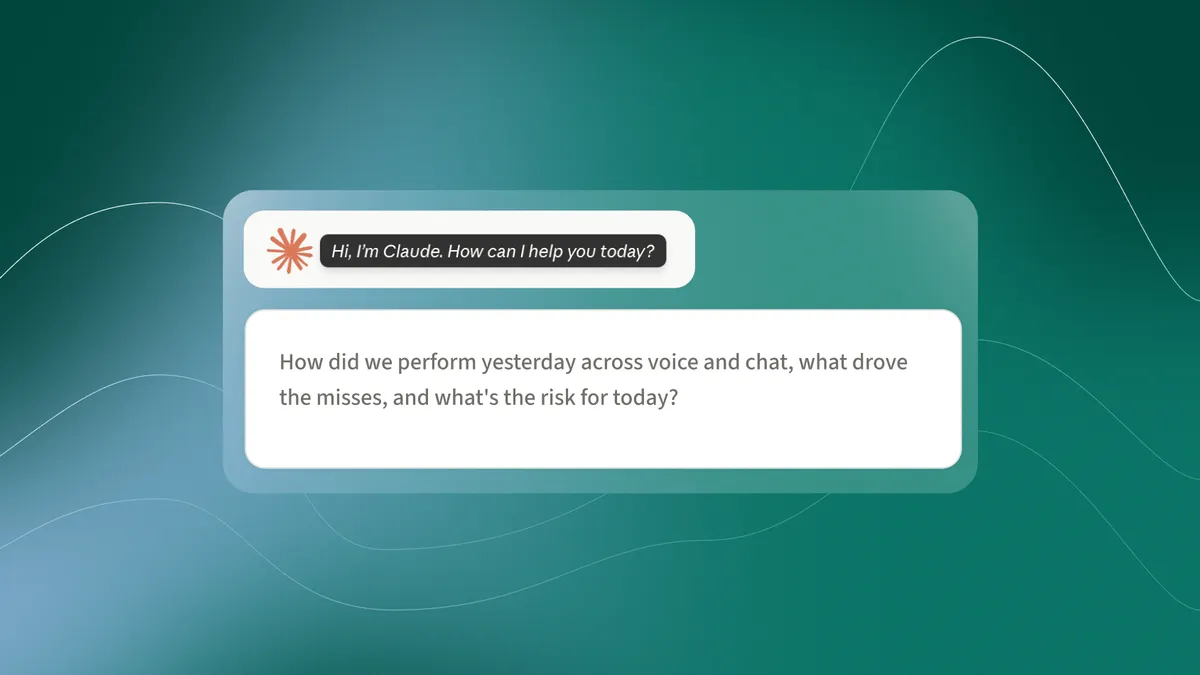
Agentic WFM is different. Instead of piecing together a daily readout by hand, a planner can ask how the team performed yesterday across every channel, what drove the misses and what the risk looks like for today. The system pulls service levels, ticket volume and staffing data on its own, surfaces the queues that missed and why and drafts the follow-up message for the team. Nobody opened a dashboard.
Where are most teams today?
Adoption breaks into three phases. In phase one, AI is a smarter search engine: ask a question, get an answer, move on. In phase two, teams start automating tasks, like a recurring report or a Slack summary posted before standup. In phase three, every tool the team touches connects to a single AI system and the job shifts from running dashboards to governing a system that does the work and flags what needs a human call.
According to McKinsey's 2025 State of AI report, 62% of organizations are still in the early, experimental stage. That gap, between building one clever prompt and changing how the team actually works, is where almost every WFM team is sitting right now. Closing it in the next year builds an advantage that's hard for late movers to catch.
What agentic WFM looks like in practice
One contact center supporting a marketplace of service businesses built a system that continuously monitors agent adherence. When an agent goes over on a break, the system detects it, adjusts the schedule and messages the agent directly. No one is watching a dashboard. This is running in production today, not a pilot and the team is saving headcount because of it.
At DraftKings, a WFM leader built a library of AI skills his whole team now uses instead of working out of a single spreadsheet. When he's out, the skills still run. When a new analyst joins, they inherit the same tools on day one. That's the shift from one person using AI at work to a team operating with AI.
What changes about the WFM role?
The honest answer is that the work changes shape, but the function doesn't disappear. Routine monitoring, report generation and standard adjustments get absorbed by automation. What's left is harder to automate and more valuable: orchestration, judgment and accountability.
A BCG analysis of AI's effect on work found that more roles will be reshaped than replaced and that the roles that survive will demand more expertise and a higher premium on judgment. An AI model told to optimize staffing will recommend near-maximum occupancy because the math looks efficient. Anyone with real WFM experience knows that's a burnout risk that spikes attrition within weeks. That judgment, knowing what the data means before it tells you, is what keeps agentic systems from making mistakes faster.
The window is open now
The personal prompts and side scripts happening across WFM teams right now are real, but they're fragile. They depend on one person knowing how to ask the right question and they don't survive a vacation.
Nobody on your team is better positioned to build the real version. You know the queues, the forecast and what good looks like before the data tells you. The tools and the data connections already exist. What's missing is someone deciding to own it.