Dive Brief:
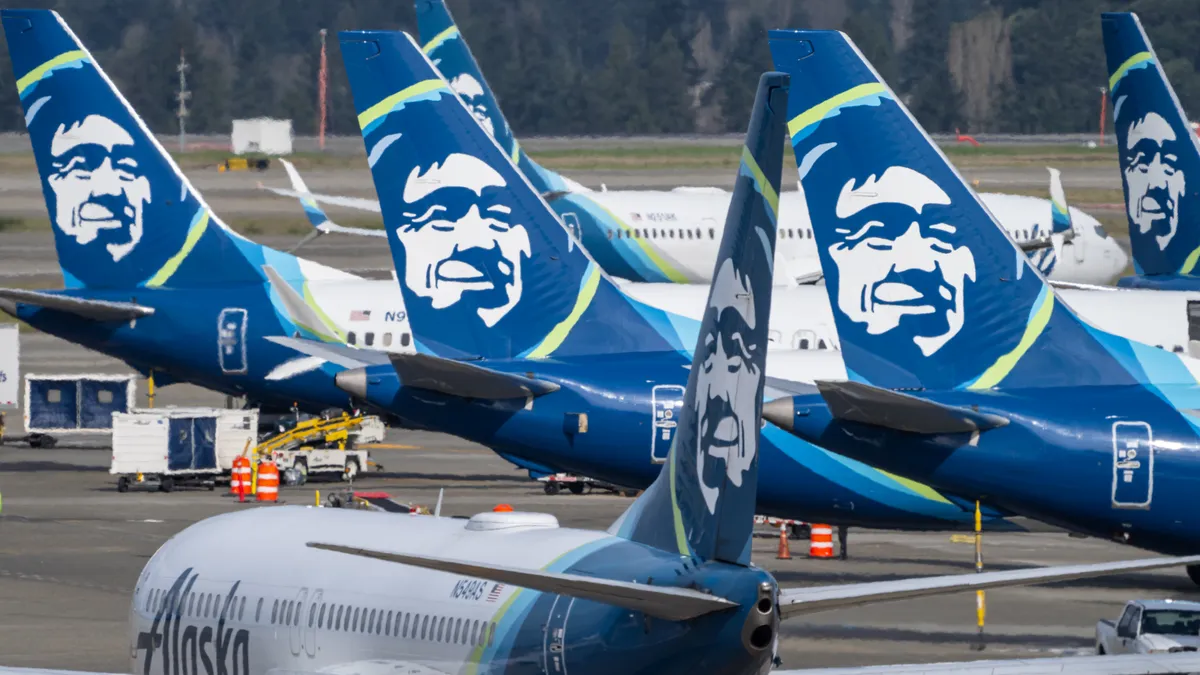
- Alaska Air Group executives reported “industry-leading” net promoter scores as the airline migrated to a single passenger service system during Q2 2026.
- Overall guest satisfaction climbed 7 percentage points quarter over quarter, and Hawaiian Airlines’ guest satisfaction jumped 10 percentage points, Ben Minicucci, president and CEO of Alaska Air Group, said on a Q2 earnings call Wednesday.
- The airline has equipped about one-third of its fleet with Starlink Wi-Fi, which is increasing satisfaction and is provided to all Atmos Rewards members for free, according to Minicucci. Guest satisfaction on flights with Starlink is 20% higher than on non-equipped flights.
Dive Insight:
Alaska Air rolled out a single passenger service system at the beginning of the quarter, further integrating Hawaiian Airlines, which it acquired in 2024.
Meant to provide a consistent travel experience across both airlines, the single passenger service system streamlines booking, check‑in, loyalty programs, airport operations and employee support. It includes a single Alaska Hawaiian app as well as an integrated airport experience.
Minicucci said that “delivering industry-leading reliability while undertaking a transformation of this scale speaks to the strength of our operation and our people.”
For achieving a single passenger service system and for their efforts throughout the Alaska-Hawaiian integration, the airline awarded all Alaska, Hawaiian and Horizon employees 75,000 Atmos Rewards points, according to the earnings release.
Alaska Air returned to profitability in June. It reported second quarter revenue of $4.1 billion, representing a 10% year-over-year increase.
Such successes were muted by volatility in jet fuel prices. Economic fuel costs skyrocketed 85% year over year to $4.43 per gallon, resulting in $600 million of incremental fuel cost for the period.
Historic rainstorms in Hawaii reduced April spring break travel, causing a 3-point drag on unit revenues.
“To wrap up, while the first half of the year was volatile, our June exit rate tells the real story: an inflection back to profitability and strong unit revenue growth,” said Andrew Harrison, EVP and chief commercial officer of Alaska Airlines.
The airline’s diversified revenue stream, including loyalty and premium revenue, provided the airline resilience. “More than half of every revenue dollar we generate now comes from outside the main cabin,” Harrison said.
Premium revenues grew 15% in the second quarter quarter, with premium revenue now representing 35% of total revenue, up 1.5 percentage points this quarter.
Loyalty remuneration grew 19% year over year, amounting to $663 million. The number of active Atmos loyalty members increased 15%, and attrition decreased 30% year over year.