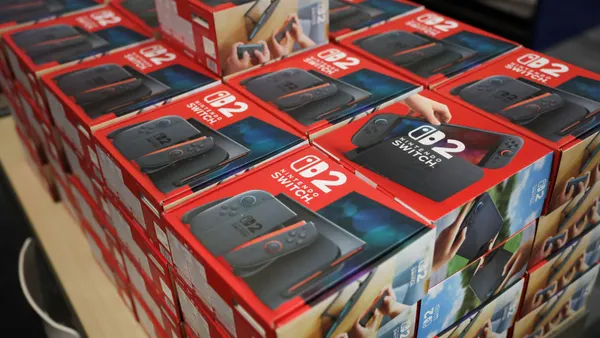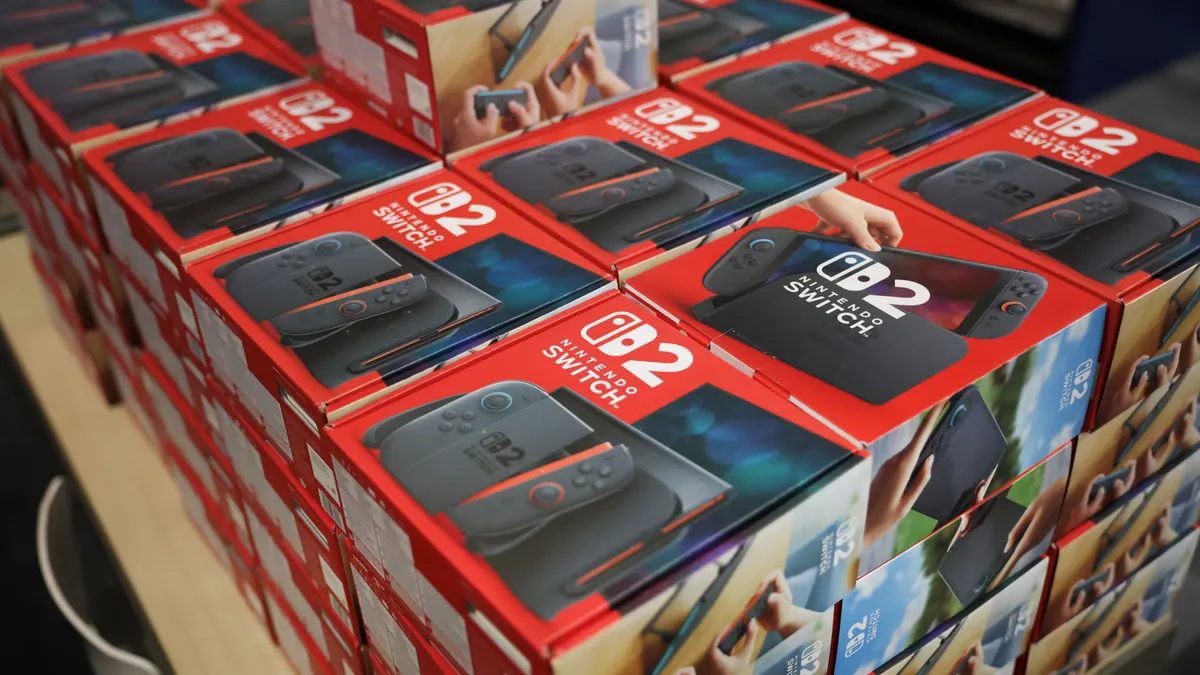
With the help of the $300 million it secured in tariff refunds, Nintendo launched a “customer appreciation sale” last week to thank its loyal customers.
The sale “is our way of saying thank you to Nintendo players for their continued support and is made possible in part by tariff-related refunds,” Nintendo said in a press release. “While Nintendo absorbed most tariff-related costs, the refunds helped make promotions like this one possible.”
Consumers bore the brunt of tariffs through higher prices, and while many don’t expect direct refunds from businesses, they will judge how businesses use the tariff refunds received from the federal government.
Time will tell how Nintendo and others will fare in the court of public opinion.
The issue of tariff refunds is a difficult one from a customer experience standpoint, according to Jon Picoult, founder and principal of Watermark Consulting.
“Ideally, if companies are receiving refunds for tariffs they paid, you’d want to see those refunds make it into the hands of consumers who paid tariff-inflated prices for various goods,” Picoult said in an email. “That seems fair, in contrast to the alternative where companies simply use the refunds to boost their profits, at the expense of the consumer.”
But it becomes more complicated when many businesses claim to have eaten some of the cost of tariffs. That creates “an accounting issue,” Picoult said.
Nintendo, for example, said it absorbed most of the tariff-related costs. Its sale, which started on Sept. 12 and runs until Sept. 26, offers 30% off Nintendo Switch games and bundles, among other discounts.
“This is Nintendo’s attempt to turn tariff refunds into a show of fairness by letting customers share in the benefit because they bore some of the tariff-related costs,” Dipanjan Chatterjee, VP and principal analyst at Forrester, told CX Dive in an email. “But scratch beneath the surface, and the proposition gets more complicated.”
Nintendo is still facing a class-action lawsuit from consumers seeking Switch 2-related tariff refunds. Nintendo had attributed the price hikes of the Switch 2 accessories in 2025 to changing “market conditions” amid tariff hikes, and in a July court filing, Nintendo sought to dismiss the lawsuit, arguing that it is “meritless.” Nintendo did not respond to a request for comment prior to publication.
With the sale Nintendo is offering this month, the customers who bore the higher costs are not necessarily being compensated, Chatterjee said.
“The only way to benefit from the promotion is to spend more money with Nintendo, generating additional revenue and profit for the company,” Chatterjee said. “So while there is certainly a goodwill component, this is fundamentally a sales promotion dressed up in the language of customer appreciation.”
Though Nintendo's customer appreciation sale is not a perfect solution, it’s better than silence, Picoult said.
“In situations where it’s not that clear cut, and individual tariff refunds can’t be easily calculated and processed, then it’s still advisable for the company to do something — so as to not appear to just be pocketing the refunds for their own enrichment,” Picoult said.
Nintendo isn’t the only company facing class-action suits. Costco and FedEx both faced class-action suits and are taking different approaches.
Rather than pursue tariff refunds on individual purchases, Costco CEO Ron Vachris said on a March earnings call that the retailer is committed to returning “this value to our members through lower prices and better values.”
On a May earnings call, Vachris reiterated that plan, stating “our plan is to return to our members, in some form, the portion of tariffs that were passed on to them. How much we return and when depends on a variety of factors, including how much refund money we receive and when it arrives as well as developments in the lawsuit filed against the company regarding the return process.”
FedEx and UPS are flowing their tariff refunds back to customers.
“If a tariff was levied as an easily identifiable line item cost to the customer — like those charged by shipping couriers as import duties — then the business should proactively be refunding those charges to their customers, as UPS and FedEx, for example, are currently doing,” Picoult said.
But for most companies, paying consumers back for the tariff costs they bore in their purchases is “supremely complicated and not commercially viable,” Chatterjee said.
Still, both Chatterjee and Picoult said something is better than nothing.
“You want to show the customer that you’re making a reasonable, good faith effort to compensate them in some fashion for the higher prices they paid from the tariffs — even if that’s not dollar for dollar,” Picoult said.