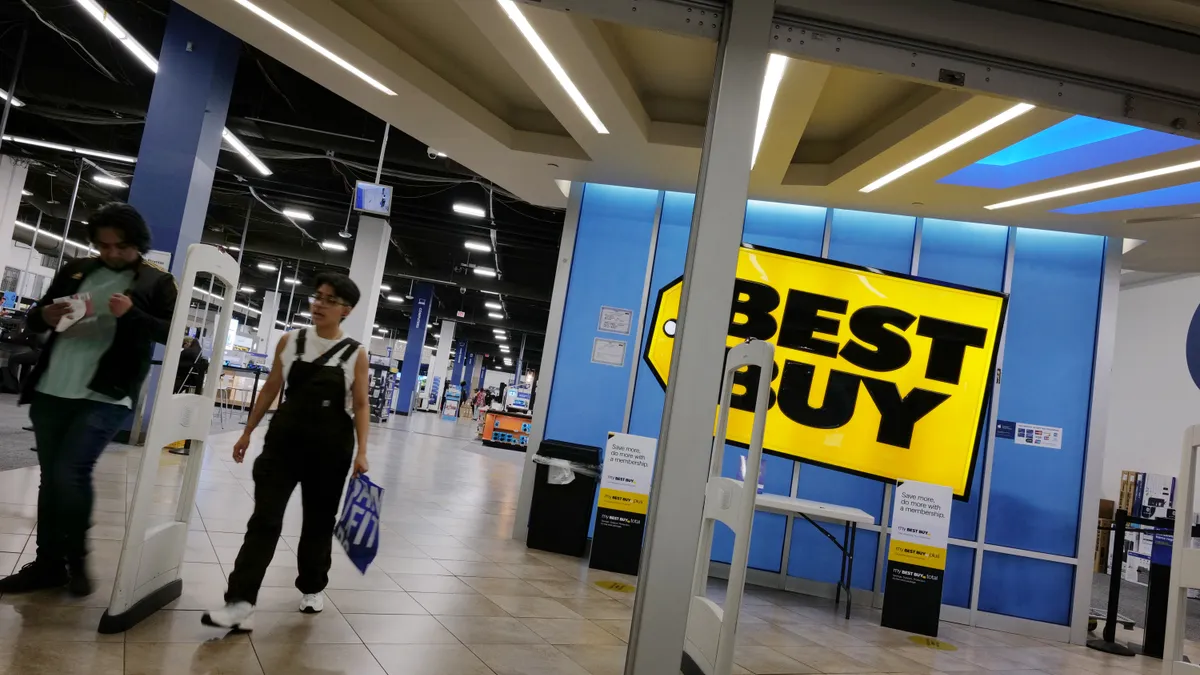
Best Buy is working to position itself at the forefront of AI-powered discovery as the company works to boost its sales growth.
“As agentic commerce matures, we want to serve our customers in new ways, both on and off of platforms,” CEO Corie Barry said during a Q4 2026 earnings call Tuesday. “That includes evolving bestbuy.com to be more agentic friendly and ensuring our site is ready for AI agents to browse and discover on behalf of our customers.”
The retailer is already working with large AI companies, from Google to OpenAI, to enhance its digital experience.
Best Buy is partnering with OpenAI to make its product catalogue available on ChatGPT and make discovery through the platform a more seamless experience, Barry said.
Making product data legible to AI is a good first step for any company interested in making investments in the technology, according to Julie Geller, principal research director at Info-Tech Research Group. Operational hygiene like consistent naming and accurate pricing is important to have in place early.
“The handoff between an AI assistant and a brand experience is becoming a trust moment,” Geller said. “If a customer clicks through from ChatGPT and encounters unclear pricing, the wrong variant, or missing availability, the issue is bigger than friction. It collapses confidence in the decision they just made with the assistant, and that hesitation is hard to recover from in-session.”
Best Buy is also supporting Google’s Universal Commerce Protocol, a standard that aims to create a seamless agentic shopping journey across businesses, according to Barry. The company is working with Google to let customers make purchases directly in AI mode while using Google Search and the Gemini app.
Working with large third parties like Google or OpenAI can increase visibility, but brands like Best Buy need to take precautions to protect their owned experience in the process, according to Geller. The biggest risk isn’t visibility — it’s the potential for margin and loyalty dilution.
“If the assistant becomes the storefront, brands get pushed down the value chain toward fulfillment,” Geller said. Discovery, evaluation and repeat purchase start happening elsewhere, which means less control over the experience, less first-party signals, and a weaker loyalty loop, even if topline revenue looks stable in the short term.”
Best Buy’s in-store experience is strong
Best Buy is building on its CX momentum by making it one of its top three priorities in the coming year, Barry said. Its efforts include in-store investments in addition to its AI ambitions.
Customers have been responding positively to Best Buy’s efforts thus far, which have included investments in technology and workforce alike.
The electronics retailer’s relationship net promoter score was up year over year in the fourth quarter and reached its highest level in 11 quarters, according to Barry. The company saw significant gains in such attributes as helpfulness, empathy and ease.
Those CX gains weren’t enough to increase revenue, however. Comparable store sales fell 0.8% year over year in the fourth quarter of 2026, according to an earnings release. Revenue was down nearly 1% year over year to $13.8 billion.
Many customers are under economic duress, and Best Buy wants to also court “the other part of the market, which is more experience-driven, more bundle, more upgrading,” Jason Bonfig, senior executive vice president and chief customer, product and fulfillment officer, said on the call.
Delivery speed is an important part of that push to ensure customers can replace or upgrade broken items as quickly as possible, according to Bonfig.
Best Buy reached its fastest-ever fulfillment speeds in the fourth quarter, with 70% of online purchases fulfilled in two days, according to Barry.
Best Buy has been investing in AI internally as well, including in customer support. But it isn’t ignoring the importance of human agents and is making live agent support through its Geek Squad a priority, according to Barry. Geek Squad agents will be available for in-home, in-store and virtual assistance even as the retailer enhances its AI capabilities.
“This dual approach allows customers to choose how they want to receive service, whether it's through direct interaction with an agent or more autonomous digital solutions, empowering customers to get the support they need on their own terms,” Barry said.