Companies have no shortage of options on how they spend a cash windfall, such as the recent payment of tariff refunds from the Trump administration. They can invest in operations, reward leaders and shareholders, or repay their shoppers.
Some companies used their money on executives. At least nine companies, including TJ Maxx parent TJX, have disclosed that they are using their refunds for bonuses rather than paying back customers, according to an analysis of thousands of securities filings and earnings calls released Monday by ProPublica.
Other retailers, including Walmart, have invested at least a portion of their refunds into price cuts. The retailer planned on investing some of the money into CX and price during the latter half of the year, CFO John David Rainey said on an August Q2 2027 earnings call.
BJ’s Wholesale Club and Lowe’s are among the businesses taking the opportunity to repay their shoppers. And while the investments may not produce immediate financial benefits, leaders at these companies expect customers to reward them with greater long-term loyalty.
For BJ’s in particular, its lump sum of money was seen as a way to grow the business for the benefit of customers and shareholders alike.
“We did not view the settlement as just an amount of cash,” CEO Bob Eddy said on a Q3 2026 earnings call Friday. “We viewed it as an opportunity to invest in BJ stakeholders, and we chose to play offense with it.”
BJ’s plays offense with its settlement funds
BJ’s chose to invest a significant part of its recent cash windfall in its customers — with expectations of driving long-term loyalty.
The warehouse club retailer received a $240 million settlement to resolve litigation related to credit card interchange fees, according to EVP and CFO Laura Felice. The company invested $95 million of that in compensation, advertising and labor initiatives.
“What matters most is not the great results in the quarter,” Eddy said. “It is that results should build over time, more loyal members, an engaged team, connections to our communities, and value for our shareholders.”
One of the major channels for investment is BJ’s ExpressPay option, which lets shoppers check out with their phones. During the month of October, members who hadn’t used ExpressPay in the past 12 months reported receiving an instant $10 coupon when they used the payment option on a purchase of $10 or more.
The initiative seems to have paid off, as ExpressPay penetration rose more than 2% during Q3 2026, according to Eddy.
Getting more customers to use ExpressPay is worth the cost, Eddy said. Once members start using the option they shop more, spend more and their net promoter score “goes up quite considerably.”
“While that may not look like the best ROI in this particular quarter, it will definitely look like a great ROI in the future,” Eddy said. “So we're pretty happy with what we did, and I think you can look for us to do more of that in the future if we have the opportunity.”
The retailer also invested its settlement in promotions designed to bring customers into stores, with an eye on bringing in newer and less engaged members, as well as awards such as gift cards for its associates, according to Eddy. The moves were part of its broader strategy for driving loyalty.
“Whether it's assortment decisions, a holiday promotional strategy, or how we negotiate indirect costs, it is all with the goal of investing back into the member experience and pouring outsized value back into our members,” Eddy said. “These everyday decisions are what drive the lifetime value base of our business.”
Lowe’s turns tariff refunds into customer value
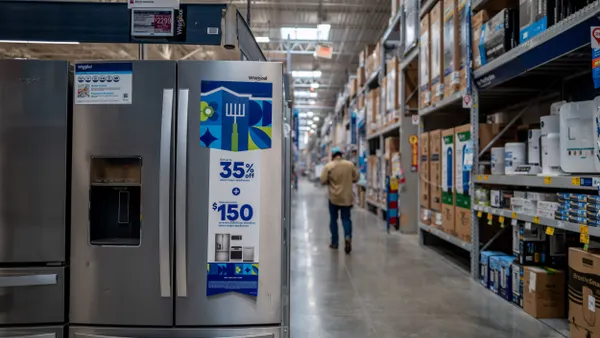
At Lowe’s, the priority for its tariff refunds is delivering on value for customers, including through a better customer experience.
The home improvement retailer recognized a refund of about $250 million in Q3 2026, according to EVP and CFO Brandon Sink. One-third was invested during the quarter in initiatives aimed at improving the customer value proposition, including its loyalty ecosystem and digital order fulfillment.
“Our priority is to put these dollars back to work for our customers, helping make their home improvement projects more affordable while building loyalty to Lowe's,” Sink said on the call.
The investments are designed to help Lowe’s remain competitive in the market — and gain market share.
Lowe’s is planning on investing the remaining two-thirds of its tariff refund during the fourth quarter of 2026 in the same areas to reinforce its value proposition, according to Sink.
One potential area of investment is the MyLowe’s Rewards loyalty program. CMO Jen Wilson will share details on its loyalty investments and the long-term benefits of getting customers into the ecosystem during Lowe’s Dec. 9 analyst and investor conference.