Dive Brief:
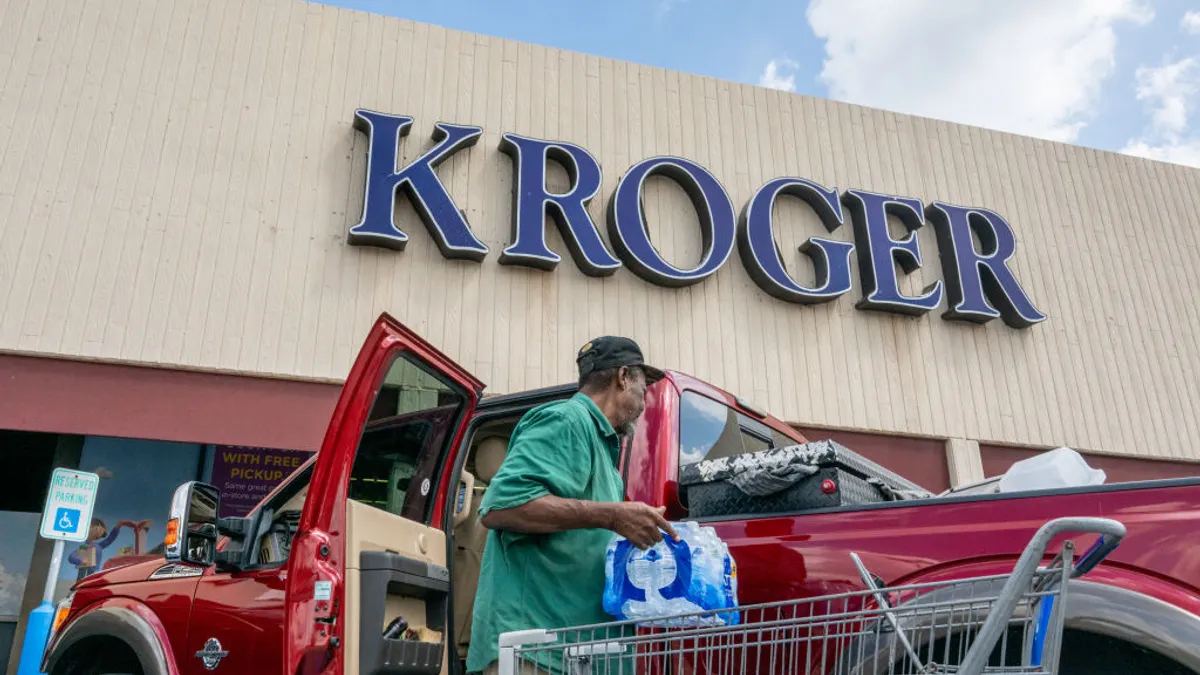
- Kroger is investing in better digital experiences in pursuit of a profitable e-commerce business, which the grocery company believes it can achieve next year, executives said on a Q3 2025 earnings call Thursday.
- Customers are looking for value, speed, flexibility and convenience, according to interim CEO Ronald Sargent. Kroger is meeting these needs by leveraging store-based fulfillment and partnerships with third-party delivery companies like Instacart, DoorDash and Uber Eats.
- In its stores, Kroger is “investing in experiences that matter most to our customers,” including improving checkout speed, service and in-stock rates, Sargent said.
Dive Insight:
Kroger is making a strong e-commerce platform central to its growth strategy, but the grocer isn’t leaving its store experience behind.
E-commerce was a highlight in Kroger’s latest earnings report, with digital sales up 17% year over year in the third quarter of 2025. Comparable sales, including fuel, rose 2.6% year over year, while net sales rose less than 1% year over year to $33.9 billion.
Kroger will close three fulfillment centers and increase store-based delivery as part of its e-commerce profitability push, according to EVP and CFO David Kennerley. The changes are expected to add $400 million in incremental e-commerce operating profit in 2026.
“The benefits from these decisions will be primarily used to reinvest in our business to increase value for customers and improve the shopping experience as we look to accelerate sales,” Kennerley said during the call.
Kroger will lean into technology as a CX driver. Sargent reiterated the company’s plans to implement Instacart’s Cart Assistant tool on its website and app in early 2026, which will let customers build shopping carts using a conversational chatbot.
“The Cart Assistant will help customers shop more effortlessly by making it easier to build personalized baskets, find meal ideas and save time,” Sargent said on the call. “We'll embrace this technology while making sure it complements what differentiates Kroger today — fresh products, unique Our Brands products and an industry-leading loyalty program.”
Kroger isn’t alone in its AI push. On Wednesday, Albertsons Companies launched an agentic AI shopping assistant on its brand websites, with plans to expand to apps in early 2026. The tool can generate meal plans and reorder frequent purchases, among other capabilities.
Kroger is using AI in its stores as well. The company’s workforce management system combines real-time labor insights and intelligent scheduling to help managers proactively fill open shifts and ensure proper staffing volumes during peak times like weekends and holidays.
“Running great stores and delivering an exceptional customer experience are central to our strategy,” Sargent said. “Our internal composite scores, which measure key metrics such as in-stocks, fresh quality and customer service continue to show steady improvement.”