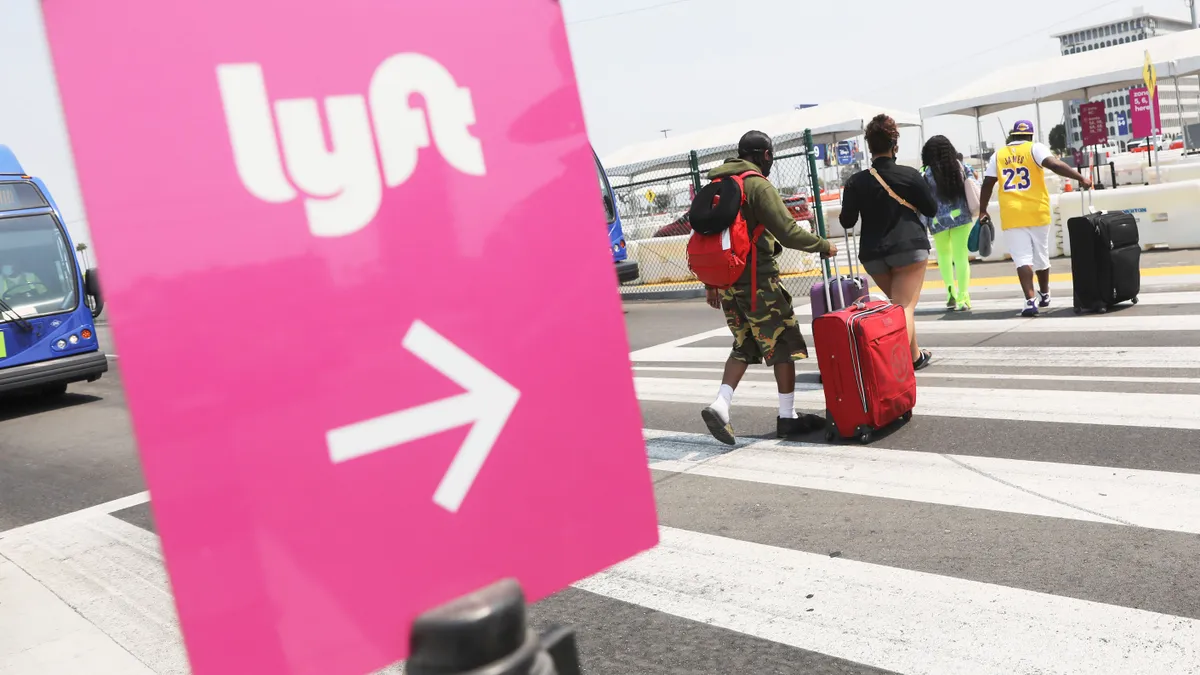
When United Airlines and Lyft announced a new loyalty program collaboration this spring, it was billed as the first direct mile-to-ride redemption between a U.S. airline and ride-hailing platform.
The big benefit: United’s MileagePlus members can now use their miles to pay for Lyft rides directly within the Lyft app.
The partnership raises questions about the wisdom of such loyalty partnerships — whether they prove valuable for customers and benefit both participating companies.
Loyalty partnerships come with risk, after all. Brands can cannibalize each other’s sales, with members comparing prices across brands and cherry-picking discounts rather than building loyalty with either one.
But experts expect the United-Lyft partnership to benefit both companies because United and Lyft aren’t competing for the same dollar. A ride to the airport isn’t a substitute for a flight.
That makes it a useful model for brands considering loyalty partnerships: Both sides get something specific from the deal, and neither has to worry about the other stealing its customers.
How United benefits
The ability for United members to use their miles on Lyft rides builds on an earlier partnership that allows members to earn miles on Lyft rides that kicked off last year — just months after Delta Air Lines ended its eight-year loyalty deal with Lyft to team up with Uber.
Members can use their miles for everyday rides, airport trips and premium options. They can also split the payment with another method if they don’t have enough miles to cover the entire fare.
For United, the partnership goes beyond providing members with an additional way to spend their miles. In addition to boosting ticket sales, airline loyalty programs can raise profits through co-branded credit cards, point redemptions and unused miles, according to Emily Weiss, senior managing director and global travel lead at Accenture.
The value of these programs became particularly evident during the pandemic when airlines sold miles to raise capital as ticket revenue plummeted.
That’s because profit margins from credit card partnerships and mile sales are typically much higher and more predictable than margins from flight operations, said Brad Jashinsky, director analyst at Gartner.
Airlines usually sell miles to partners at a discounted rate, and when members redeem those miles for rides, they often receive less value per mile than they do for flights.
“But I don’t think United’s doing partnerships like this just to get miles off the books at a more affordable price,” Jashinsky said.
The main objective is to make it easier for members to cash in rewards, as occasional travelers might take years to accumulate enough miles for a free flight, but can now get value from the program after just one or two trips.
“What they’ve really been trying to do, and what I applaud them for on their strategy, is being able to provide rewards much quicker to those occasional travelers or to those new members,” Jashinsky said.
But whether consumers actually want to spend airline miles on rideshares depends on the consumer. Points maximizers will continue to use their rewards for flights because it’s a better value.
But many members will welcome more “micro-earn and burn opportunities” to use their rewards, Weiss said.
Just over half of airline loyalty members feel that programs no longer provide the same level of value, according to Accenture’s 2025 Consumer Pulse Study. Over 90% want to choose how they are rewarded rather than conforming to a one-size-fits-all model.
For occasional travelers, new members and frequent flyers holding large mileage balances, the Lyft integration offers a benefit that previously did not exist. A member with hundreds of thousands of miles may not be maximizing their per-mile value, but they are receiving a new perk at no additional cost.
“They’re not forced to use it,” Jashinsky said.
Lyft’s portfolio approach
Lyft approaches its brand partnerships as a portfolio, with each one filling a different role.
Some, like DoorDash, are designed to drive ride volume and bring in new customers. United fills a different niche, as its loyalty members tend to be business travelers booking airport rides, which carry stronger per-ride revenue and margins for Lyft, CEO David Risher said on the company’s May earnings call.
Those partnerships are paying off. Partnership-connected rides accounted for 27% of Lyft’s total rides in the first quarter, a share that has steadily grown from around 20%, according to Risher. Lyft has also awarded more than 350 million miles to MileagePlus members between the launch of the earn feature and the end of the first quarter, and riders linked to partners book more often and at higher price points than those who aren’t.
While such partnerships can introduce risk, that dynamic tends to surface when partners operate in overlapping spending categories.
That’s why partner brands should complement, rather than replace, each other’s core values, Weiss said.
But adding more partners isn’t always an improvement. When brands rush to scale through third-party merchant offers, members end up with generic deals that feel more like advertising than loyalty benefits.
“More is not always better, especially with partnerships,” Jashinsky said.
Jashinsky added that brands should start with smaller, time-limited collaborations that have clear objectives for specific customer segments and include an agreed-upon exit strategy — an approach that United and Lyft followed by launching earning capabilities in November 2025 before introducing the redemption option five months later.
United is “intentional about the partners we bring on, prioritizing those where we can build deeply,” a company spokesperson said in an email.
But for CX leaders, the takeaway is clear: lowering the reward threshold to engage casual customers faster, even at a lower return per point, can keep members active in a program long enough to build real loyalty.
“How do we reward people sooner when they join a program?” Jashinsky said. “I think this is a great example of that trend continuing.”