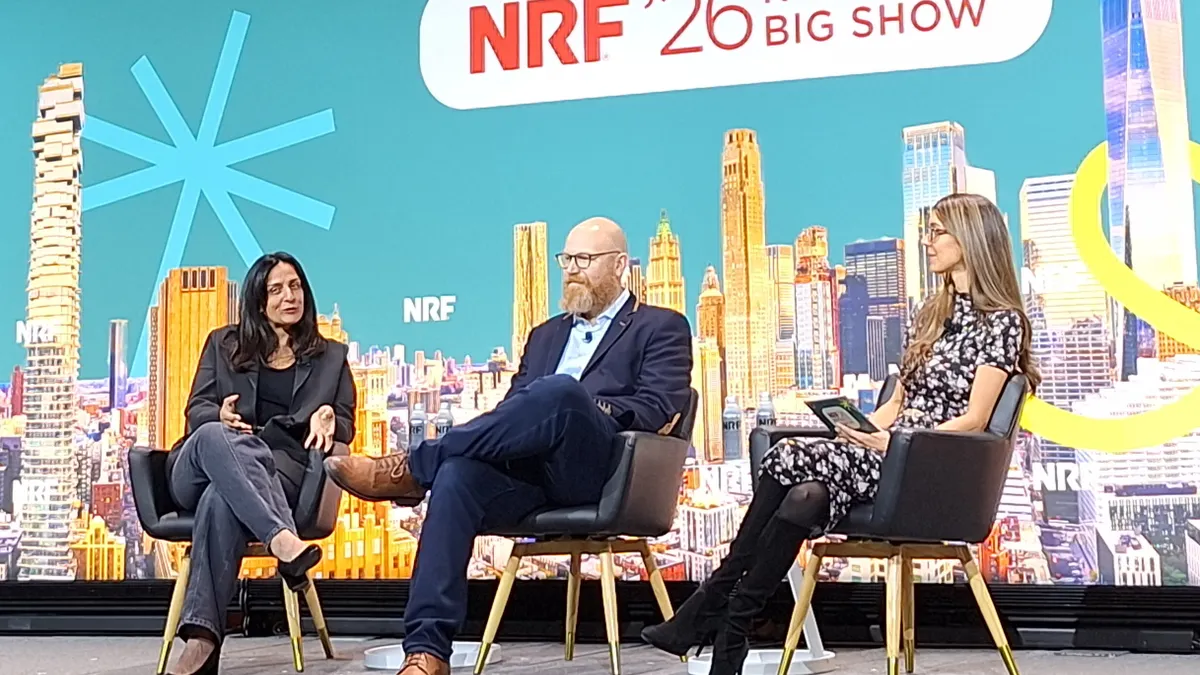
The art of building customer loyalty has changed from a slow, steady process to an immediate demand for relevant, personalized experiences, executives said Monday at the National Retail Federation Big Show.
Today’s consumers don’t just expect basic personalization, according to Jason Johnson, CIO of audio equipment retailer Sweetwater Sound. They expect brands to have a tailored experience ready for them when they arrive, no matter how deep into the shopping journey that is.
“Five or 10 years ago, loyalty was something that you accrued over time with your customers, and I think now the customers expect you to bring your loyalty to them,” Johnson said during the session.
The difference is a growing lack of patience among consumers, according to Meera Bhatia, president and COO at Fabletics. Companies no longer have the luxury of getting to know their customers before serving them.
“You don't have as much time to make mistakes or mess around,” Bhatia said during the session. “Customers just want to get straight to the answer as quickly as possible.”
AI should be proactive, not reactive
Fabletics uses its flexible subscription model, which allows customers to pause instead of cancel, to help it gather information on customers. It applies this data to improve the experience online and across its physical stores.
About 90% of transactions are from customers who are logged in to their Fabletics accounts, according to Bhatia. Fabletics uses AI to process 70 billion customer data points and feed that information throughout its operations.
The strategy is to position AI as an “enabler for personalized interactions,” as opposed just to using it to analyze how customers interact with the brand, Bhatia said. The technology is used for tasks ranging from determining which products are highlighted for a customer to coaching store associates in real time.
“It kind of gets back to that first thing I was saying, which is that we have a shrinking window of patience,” Bhatia said. “And so the more that we can use this to make those touch points more relevant, more personalized, just better, the more loyalty you're going to attract.”
Better customer profiles, better connections
Sweetwater Sound serves a broad base of musicians, and AI has helped the company understand its customers on a deeper level.
The number of predictive traits tracked in Sweetwater Sound’s consumer data program has jumped from in the tens to over 600 since it started using AI, according to Johnson. Its customers range from people just playing in their basement to musicians taking gigs, and breaking down the needs of each shopper is essential to supporting their experience.
The audio equipment retailer makes as many as 40,000 outbound calls a day, Johnson said. “We're talking to customers all the time, and so we're constantly trying to mine that data and figure out the brand that we need to be at that point in time for that customer on the journey that they're at.”
AI is helping Sweetwater Sound analyze what is working for its sales associates as well, according to Johnson. Customer phone calls are full of valuable feedback, but managers could only listen to a fraction of the total volume.
Now AI can analyze every interaction and use it to coach associates, Johnson said. The retailer’s AI tools send employees emails that include a list of several things they’re doing well alongside a suggestion of a way they can better meet customers where they are, such as with a warmer opening or greater empathy.